
Chicago, IL 60611 United States


Overview
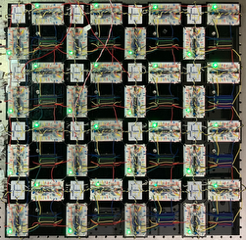
Many biological systems have evolved to embody solutions to complex inverse problems to produce desired outputs or functions; others have evolved strategies to learn solutions to complex inverse problems on much shorter (e.g. physiological or developmental) time scales. Another class of systems that solves complex inverse problems for desired outputs is artificial neural networks. A critical distinction between the biological systems and neural networks is that the former are not associated with processors that carry out algorithms such as gradient descent to solve the inverse problems. They must solve them using local rules that only approximate gradient descent. Thus a key challenge is to understand how biological systems encode local rules for experience-dependent modification in physical hardware to implement robust solutions to complex
inverse problems. A similar challenge is faced by a growing community of researchers interested in developing physical systems that can solve inverse problems on their own. Despite the differences between physical/biological systems that solve inverse problems via local rules on one hand, and neural networks that solve them using global algorithms like gradient descent on the other hand, each has the potential to inform the other. For example, the insight that overparameterization is important for obtaining good solutions generalizes from neural networks to physical/biological learning systems.
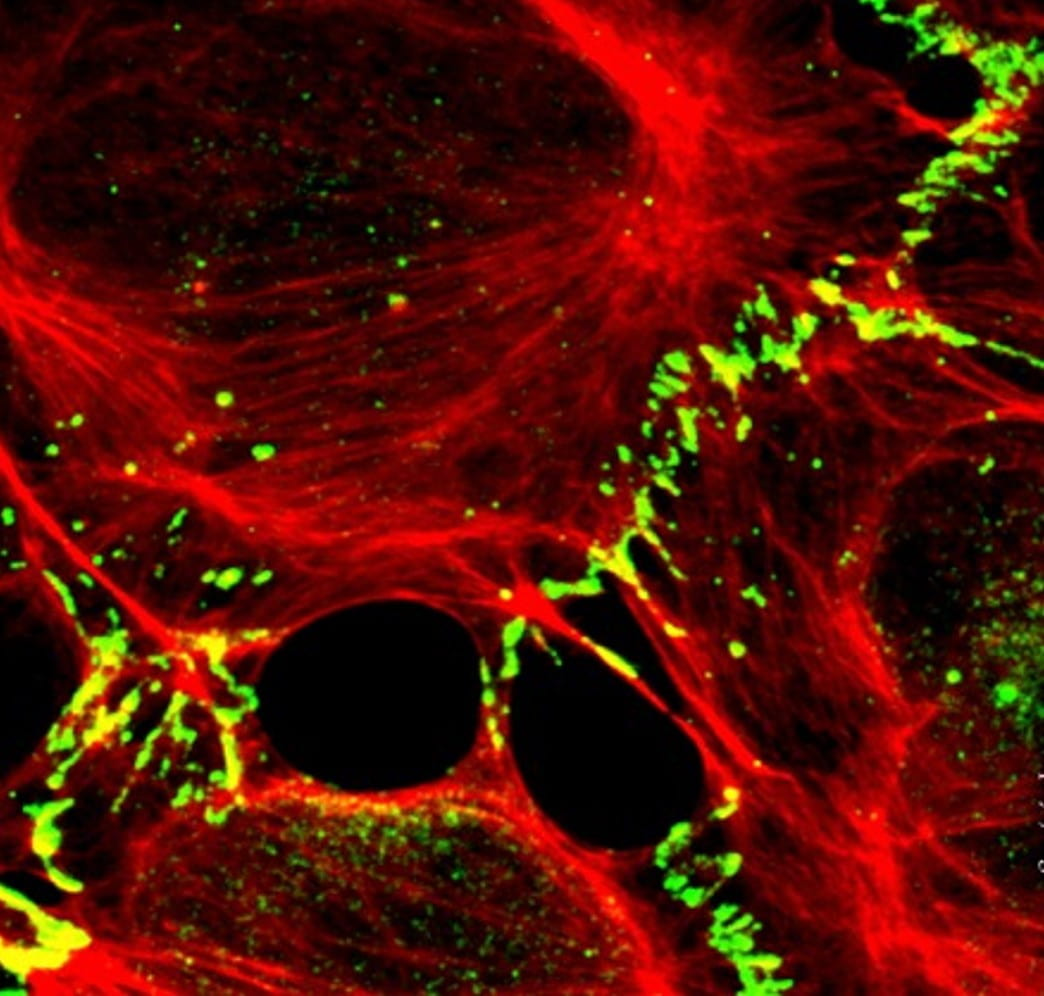
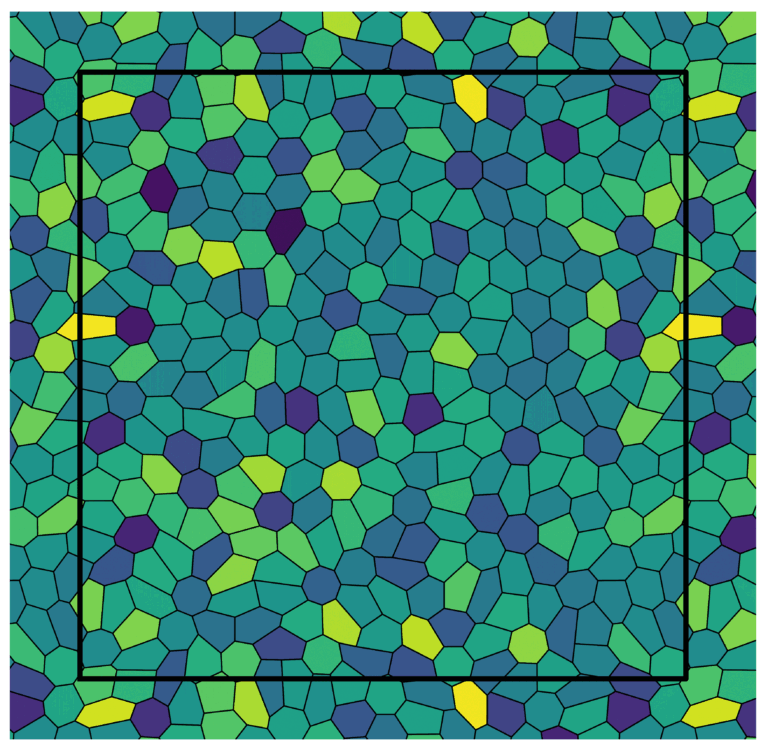
Examples of biological systems that learn at different scales include (1) biological filament networks such as the actin cortex, collagen extracellular matrix and fibrin blood clots, which maintain rigidity homeostasis as an output under constantly varying and often extreme stresses as inputs. (2) Epithelial tissues during various stages of development, which can undergo large shape changes and controlled cellular flows as desired outputs. (3) Immune systems, which constantly adapt to bind to invading pathogens as desired outputs. (4) Ecological systems, in which species can change their interactions (eg. learn to consume new species) in order to bolster their population as an output.
The goal of this workshop is to discover new core principles and mathematical tools/approaches shared across physical learning systems, biological learning systems and neural networks that will inform deeper understanding and future discovery in all 3 fields. To this end, we will bring together researchers interested in viewing biological problems through the lens of inverse problems, researchers working on physical learning, and researchers studying neural networks for a week of intensive discussion and cross-fertilization.
We envision a unique format for this workshop, focused on framing and discussing open questions rather than on recitations of recent results. We will ask a subset of participants to present pedagogical overviews of key topics to help members of disparate communities establish common intellectual ground for discussion.
Schedule
January 06 2025 Monday
Chair: Margaret Gardel Speakers & Facilitators: Andrea Liu, Vincenzo Vitelli, Arvind Murugan, Eric Dufresne, Varda Hagh, Stephanie Palmer, Jen Schwarz, Suri Vaikuntanathan, Lisa Manning & Aaron Dinner
8:30 am - 8:55 am
Light Breakfast
8:55 am - 9:00 am
Welcome, Introduction of Institute & Housekeeping - NITMB Leadership
9:00 am - 9:30 am
Workshop Overview Talk - Andrea Liu & Vincenzo Vitelli
9:30 am - 10:00 am
Whole Group Discussion
10:00 am - 10:15 am
Coffee Break
10:15 am - 11:00 am
Brief Self-Introductions
11:00 am - 11:15 am
Overview Talk: Local rules for training effective interactions – Arvind Murugan & Eric Dufresne
11:15 am - 11:45 am
Whole Group Discussion
12:00 pm - 1:00 pm
Lunch
1:00 pm - 2:30 pm
Small Group Discussions
Discussion 1: Memory vs. learning – Varda Hagh & Stephanie Palmer
Discussion 2: Local Rules vs. Gradient Descent vs. Evolution – Jen Schwarz & Suri Vaikuntanathan
Discussion 3: Why is learning framework useful? – Lisa Manning & Aaron Dinner
Discussion 4: [democratic selection from AM talks] – TBD & TBD
Discussion 5: [democratic selection from AM talks] – TBD & TBD
2:30 pm - 3:00 pm
Break
3:00 pm - 4:00 pm
Report Back
4:00 pm - 5:00 pm
Poster Session & Drinks
January 07 2025 Tuesday
Chair: Andrea Liu Speakers & Facilitators: Xiaoming Mao, Varda Hagh, Bill Bialek, Adrienne Fairhall, Paul Francois, Matthew Bull, Paul Janmey, Fridtjof Brauns, Greg Handy, Stephanie Palmer, Jen Schwarz & Chris Kempes
8:30 am - 8:55 am
Light Breakfast
8:55 am - 9:00 am
Welcome & Housekeeping - Andrea Liu
9:00 am - 9:15 am
Overview Talk: Metamaterials – Xiaoming Mao & Varda Hagh
9:15 am - 9:45 am
Whole Group Discussion
9:45 am - 10:00 am
Overview Talk: Neuroscience – Bill Bialek & Adrienne Fairhall
10:00 am - 10:30 am
Whole Group Discussion
10:30 am - 10:45 am
Coffee Break
10:45 am - 11:00 am
Overview Talk: Cell Information Processing – Paul Francois & Matthew Bull
11:00 am - 11:30 am
Whole Group Discussion
12:00 pm - 1:00 pm
Lunch
1:00 pm - 2:30 pm
Small Group Discussions
Discussion 1: Biological mechanical networks – Paul Janmey & Fridtjof Brauns
Discussion 2: Computational Neuroscience: how much complexity needed? – Greg Handy & Stephanie Palmer
Discussion 3: How does size impact learning – Jen Schwarz & Chris Kempes
Discussion 4: [democratic selection from AM talks] – TBD & TBD
Discussion 5: [democratic selection from AM talks] – TBD & TBD
2:30 pm - 3:00 pm
Break
3:00 pm - 4:00 pm
Report Back
4:00 pm - 5:00 pm
Poster Session & Drinks
January 08 2025 Wednesday
Chair: Lisa Manning Speakers & Facilitators: Marc Miskin, Itai Cohen, Sid Goyal, Chris Kempes, Margaret Gardel, Suzanne Rafelski, Sid Nagel, Andrea Liu, Gasper Tkacik, Francis Corson, Paul Macklin, Itai Cohen, Tsvi Tlusty & Will Jacobs
8:30 am - 8:55 am
Light Breakfast
8:55 am - 9:00 am
Welcome & Housekeeping - Lisa Manning
9:00 am - 9:15 am
Overview Talk: Robotics – Marc Miskin & Itai Cohen
9:15 am - 9:45 am
Whole Group Discussion
9:45 am - 10:00 am
Overview Talk: Ecological – Sid Goyal & Chris Kempes
10:00 am - 10:30 am
Whole Group Discussion
10:30 am - 10:45 am
Coffee Break
10:45 am - 11:00 am
Overview Talk: Cell Information Processing – Margaret Gardel & Suzanne Rafelski
11:00 am - 11:30 am
Whole Group Discussion
12:00 pm - 1:00 pm
Lunch
1:00 pm - 2:30 pm
Small Group Discussions
Discussion 1: Darwinian vs. Lamarckian evolution – Sid Nagel & Andrea Liu
Discussion 2: Fidelity with variation: Robustness vs. versatility – Gasper Tkacik & Francis Corson
Discussion 3: Training dynamical systems – Paul Macklin & Itai Cohen
Discussion 4: Protein structure and function – Tsvi Tlusty & Will Jacobs
Discussion 5: [democratic selection from AM talks] – TBD & TBD
2:30 pm - 3:00 pm
Break
3:00 pm - 4:00 pm
Report Back
4:00 pm - 5:00 pm
Excursion (Off Site)
January 09 2025 Thursday
Chair: Ed Munro Speakers & Facilitators: Mehran Kardar, Thierry Emonet, Lisa Manning, Ed Munro, Carl Goodrich, Jerelle Joseph, Crisy Xiyu Du, Kristina Trifonova, Nachi Stern, Doug Durian & Martin Falk
8:30 am - 8:55 am
Light Breakfast
8:55 am - 9:00 am
Welcome & Housekeeping
9:00 am - 9:30 am
Overview Talk: Immunity – Mehran Kardar & Thierry Emonet
9:30 am - 9:45 am
Whole Group Discussion
9:45 am - 10:00 am
Overview Talk: Development – Lisa Manning & Ed Munro
10:00 am - 10:30 am
Whole Group Discussion
10:30 am - 10:45 am
Coffee Break
10:45 am - 11:00 am
Overview Talk: Training self-assembly – Carl Goodrich & Jerelle Joseph
11:00 am - 11:30 pm
Whole Group Discussion
12:00 pm - 1:00 pm
Lunch
1:00 pm - 2:30 pm
Small Group Discussions
Discussion 1: Training Self-Assembly – Crisy Xiyu Du & Jerelle Joseph
Discussion 2: Molecular reaction networks – Kristina Trifonova & Nachi Stern
Discussion 3: Overparameterization without overfitting – Doug Durian & Martin Falk
Discussion 4: [democratic selection from AM talks]
Discussion 5: [democratic selection from AM talks]
2:30 pm - 3:00 pm
Break
3:00 pm - 4:00 pm
Report Back
5:00 pm - 6:00 pm
Reception/Dinner (in suite)
January 10 2025 Friday
Chairs: LIsa Manning & Margaret Gardel
8:30 am - 8:55 am
Light Breakfast
8:55 am - 9:00 am
Welcome & Housekeeping
9:00 am - 10:00 am
Wrap-up Discussions
10:00 am - 10:30 am
Coffee Break
10:30 am - 11:30 am
What's Next Planning
12:00 pm - 1:00 pm
Lunch
1:00 pm
Stay as long as you like!
Participants
Participants
Raúl Álvarez Candás – AMOLF
Shabeeb Ameen – Syracuse University
William Bialek – Princeton University
Giulio Biroli – ENS Paris
Fridtjof Brauns – UC Santa Barbara
Michael Brenner – Harvard University
Matthew Bull – Allen Institute, Cell Science
Itai Cohen – Cornell University
Pilar Cossio – Flatiron Institute
Aaron Dinner – University of Chicago
Jorn Dunkel – MIT
Doug Durian – University of Pennsylvania
Thierry Emonet – Yale University
Varda Faghir Hagh – University of Illinois Urbana-Champaign
Adrienne Fairhall – University of Washington
Jasmine Foo – University of Minnesota
Paul Francois – University of Montreal
Carl Goodrich – IST Austria
Sidhartha Goyal – University of Toronto
Gregory Handy – University of Minnesota
Miranda Holmes-Cerfon – University of British Columbia
Peko Hosoi – MIT
William Jacobs – Princeton University
Paul Janmey – University of Pennsylvania
Elizabeth Jerison – University of Chicago
Jerelle Joseph – Princeton University
Mehran Kardar – MIT
Karen Kasza – Columbia University
Christopher Kempes – Santa Fe Institute
Konrad Kording – University of Pennsylvania
Shuaifeng Li – University of Michigan
Xiaoming Mao – University of Michigan
Marc Miskin – University of Pennsylvania
Arvind Murugan – University of Chicago
Sidney Nagel – University of Chicago
Braulio Ojeda Valencia – University of Toronto
Monica Olvera de la Cruz – Northwestern University
Matheus Palhares Viana – Allen Institute, Cell Science
Lucas Pelkmans – UTH Zurich
Merlin Pelz – University of Minnesota
Susanne Rafelski – Allen Institute, Cell Science
Benjamin Scellier – Rain Neuromorphics
Jennifer Schwarz – Syracuse University
Menachem “Nachi” Stern – AMOLF
Bozhi Tian – University of Chicago
Tsvi Tlusty – Ulsan National Institute for Science and Technology
Suri Vaikuntanathan – University of Chicago
Vincenzo Vitelli – University of Chicago
Tom Witten – University of Chicago
Du Xiyu – University of Hawai`i at Mānoa