

Chicago, IL 60611 United States


Overview
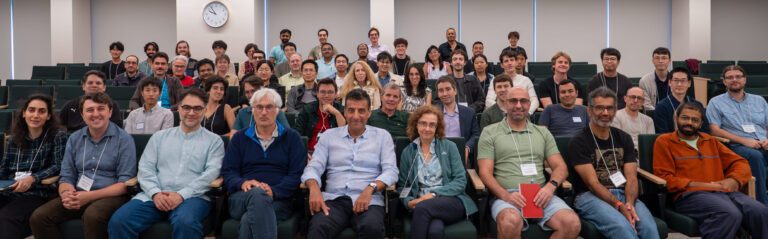
Modern biology is grappling with a new class of problems defined by overwhelming complexity. From understanding evolution to deciphering the neural code, we are no longer studying linear chains of cause and effect but vast, high-dimensional systems of interacting components. The central challenge is to navigate the immense “landscape” that are mountainous terrains with countless peaks and valleys. On the other hand, arising from statistical physics, the theoretical framework of spin glasses was created precisely to describe systems driven by disorders and frustration – the exact same principles that shape biological complexity. The primary goal of this workshop is to cultivate a shared language and foster concrete collaborations based on this theoretical foundation to produce paradigm-shifting advances. By uniting mathematicians, physicists, and biologists, we aim to seed a new, interdisciplinary field capable of tackling previously intractable problems in evolution, neuroscience, and immunology.
Schedule
August 24 2026 Monday
8:30 am - 9:00 am
Breakfast
9:00 am - 10:15 am
Rama Ranganathan
Generative models for understanding and designing proteins
10:15 am - 10:45 am
Coffee Break
10:45 am - 12:00 pm
Gerard Ben Arous
12:00 pm - 1:00 pm
Lunch
1:00 pm - 2:15 pm
Joachim Krug
Structure and navigability of fitness landscapes: From models to data
The lecture will consist of three parts. First, I will introduce the mathematical framework for modeling high-dimensional fitness landscapes, including in particular the structure of sequences spaces as Hamming graphs; series representations of functions on these graphs; and the quantification of navigability in terms of rank order properties of landscapes. Second, I will discuss a selection of empirical data sets and describe some of the emerging patterns that need to be explained by models. Third, I will present two case studies of specific landscape models with close connections to spin glass theory: The House-of-Cards/Random Energy model, and the genotype-based version of Fisher’s geometric model, which is equivalent to an antiferromagnetic Hopfield model.
2:15 pm - 5:00 pm
discussion+poster session
August 25 2026 Tuesday
8:30 am - 9:00 am
Breakfast
9:00 am - 9:40 am
Patrick Charbonneau
Active exploration of caging and criticality in the random Lorentz gas
The random Lorentz gas (RLG) is a minimal model for transport in disordered media, where a tracer undergoes a localization transition controlled by void-space percolation. Beyond this geometric criticality, the model also exhibits glasslike dynamical features, including transient caging and activated escape processes, whose interplay is now relatively well characterized in both finite and high dimensions. In this talk, I focus on how activity reshapes this picture. Using an active Brownian tracer in the RLG, we show that self-propulsion qualitatively alters cage exploration: instead of relying on rare hopping events, active particles preferentially probe lower-dimensional escape pathways along obstacle surfaces. This mechanism enhances transport in crowded environments and gives rise to distinct critical fluctuations, while leaving the underlying percolation transition unchanged. These results demonstrate that dynamical arrest in active systems cannot be understood as a simple extension of passive glassiness, but instead reflects a fundamental reorganization of how geometry and dynamics interact. The RLG thus provides a controlled setting to disentangle geometric constraints from nonequilibrium effects in complex systems.
9:40 am - 9:50 am
Break
9:50 am - 10:30 am
Valentina Ros
Many-species ecosystems with multiple fixed-points: how many, how stable, how relevant?
This talk will focus on dynamical systems with many positive variables interacting through random and non-reciprocal couplings, which can be used to model the dynamics of species abundances in large ecosystems. These systems are characterized by multistability, with an exponentially large number of fixed points coexisting as possible attractors of the dynamics. A central question is to what extent the dynamics can be understood from the statistical properties of these attractors. I will discuss how to characterize the statistical properties of equilibria in a standard model (generalized Lotka-Volterra model) and show that they undergo transitions as the parameters of the system are varied. I will then discuss what these transitions may imply for the dynamics, and highlight open questions concerning the connection between the geometry of the attractor landscape and the resulting dynamical behavior.
10:30 am - 10:40 am
Break
10:40 am - 11:20 am
Joseph Thornton
The architecture and evolutionary consequences of epistatic interactions across 500 million years of protein evolution
We experimentally measured the effects of all possible single mutations and all pairs of mutations in an essential transcription factor across a phylogenetic series of reconstructed ancestral proteins that span more than 500 million years of evolution. With these experiments we provide a complete description of the protein’s first- and second-order epistatic architecture and its relationship to protein structure, how that architecture changed over evolutionary time, and how epistatic drift modified the evolutionary accessibility of mutations as substitutions accumulated during long-term protein evolution.
11:20 am - 12:00 pm
Discussion
12:00 pm - 1:00 pm
Lunch
1:00 pm - 1:40 pm
Pierfrancesco Urbani
Dynamics of training and inference: from overparametrized two-layer networks to neural ODEs
In the first part of this talk, I address the feature learning/overfitting puzzle in modern machine learning. Deep learning commonly employs large, overparameterized neural networks—so expressive that they can fit pure noise. Yet, when trained on structured data, these models extract latent features. I argue that overfitting and feature learning coexist in such models but unfold on distinct timescales during training. This conclusion arises from analyzing gradient descent dynamics in overparameterized two-layer neural networks trained on single-index data, where the separation of timescales stems from the gradual increase in model complexity when starting from low initial complexity.
In the second part, I broaden this analysis to neural ordinary differential equations (neural ODEs), a framework that captures models where training and inference dynamics interact, such as generative models and recurrent neural networks. I present a class of nonlinear, controlled, high-dimensional dynamical systems and explain how their training and inference dynamics can be studied using Dynamical Mean Field Theory.
Based on:
– Montanari, Urbani, Dynamical Decoupling of Generalization and Overfitting in Large Two-Layer Networks. NeurIPS 2025.
– Urbani, Theory of learning of high-dimensional controlled non-linear dynamical systems (I): models and methods. arXiv:2606.07247v2
1:40 pm - 1:50 pm
Break
1:50 pm - 2:30 pm
Sara Solla
A mean-field theory for heterogeneous networks of spiking neurons
Neural populations are composed of subpopulations, each associated with a genetically distinct neuron type. Since neurons of the same type can express considerable variance in their structural and response properties, a model of neural diversity should reflect the contributions of both distinct cell types and of heterogeneity across cells within a given type. We have extended an existing mean-field theory approach to study the macroscopic dynamics of networks of Izhikevich spiking neurons that incorporate both within-type and between-type heterogeneity. Bifurcation analysis produces phase diagrams that identify the various macroscopic dynamical regimes that arise at the population level and their relation to the underlying microscopic neural heterogeneity. As an example, our results indicate that the level of heterogeneity within inhibitory populations controls resonance and hysteresis properties of E-I networks composed of both excitatory and inhibitory neurons.
2:30 pm - 2:40 pm
Break
2:40 pm - 3:20 pm
Ahmed El Alaoui
Free-probabilistic state evolution and random matrix discrepancy
3:20 pm - 5:00 pm
Discussion + Poster session
5:00 pm - 6:30 pm
Reception
August 26 2026 Wednesday
8:30 am - 9:00 am
Breakfast
9:00 am - 9:40 am
Mikhail Tikhonov
Wanted: Statistical physics of microbial ecosystems shaped by physiological constraints
9:40 am - 9:50 am
Group Photo
9:50 am - 10:30 am
Simona Cocco
Mutational Paths in Sequence Landscapes inferred from Data
In the first part of the talk I will introduce unsupervised generative models learned on protein sequence data, in particular Restricted Boltzmann Machine.
I will then describe a Monte-Carlo Path sampling algorithm to sample mutational paths in the sequence landscape inferred by our model.
Ithe mutational paths algorithm will be used to sample evolutionary paths for the the WW domain,both between two different natural proteins with the same binding specificity and between two natural proteins with different binding specificities.
I will finally apply the path sampling algorithm and its mean-field derivation to sample evolutionary paths for the Receptor Binding Domain of the Spike protein in SARSCoV2 under the pressure pf antibody escaping.
10:30 am - 10:40 am
Break
10:40 am - 11:20 am
Luca Mazzucato
Glassy dynamics in recurrent neural networks
We examine the dynamics of recurrent neural network models of cortical circuits. Each network unit represents the collective activity of a cortical neural assembly, whose size is encoded in the unit’s self-coupling, while recurrent couplings are random and uncorrelated. As the self-coupling increases, the network first undergoes a phase transition from chaos to a multistable regime with an exponentially large number of stable states, dominated by a marginal manifold. For larger self-coupling values, the dynamics become trapped and aging occurs. Perturbing the network with an external input resets aging and induces rejuvenation. Our results demonstrate that aging can occur in the absence of reciprocal couplings and it relies on a self-coupling interaction, consistent with the assembly structure observed in cortical circuits.
11:20 am - 12:00 pm
Discussion
12:00 pm - 2:00 pm
Lunch on your own
2:00 pm - 5:00 pm
Free Time
August 27 2026 Thursday
8:30 am - 9:00 am
Breakfast
9:00 am - 9:40 am
Shuangping Li
Stable algorithms cannot reliably find isolated perceptron solutions
The binary perceptron is a random constraint satisfaction problem that seeks a Boolean vector lying in the intersection of independently sampled random halfspaces. At every positive constraint density, nearly all solutions are expected to be strongly isolated, meaning that they are separated from every other solution by Hamming distance Ω(N). Yet efficient algorithms can find solutions at some positive constraint densities, raising the question of whether isolated solutions can be found algorithmically. The results show that algorithms whose outputs remain stable under a tiny Gaussian resampling of the disorder cannot reliably locate such solutions. Any stable algorithm succeeds with probability at most 0.85. Moreover, a stable algorithm that finds some solution with probability 1 − o(1) finds an isolated solution with probability only o(1). This algorithmic class includes degree-D polynomials for D = o(N/log N), suggesting under the low-degree heuristic that locating strongly isolated solutions requires exp(Θ̃(N)) time. The proof avoids the overlap gap property and instead applies Pitt’s correlation inequality to show that, after a random perturbation, the number of solutions near a pre-existing isolated solution cannot concentrate at one.
This is based on joint work with Shuyang Gong, Brice Huang, and Mark Sellke.
9:40 am - 9:50 am
Break
9:50 am - 10:30 am
Vincenzo Vitelli
Inertial asynchronous computation
10:30 am - 10:40 am
Break
10:40 am - 11:20 am
David Gamarnik
Partition function of the Sachdev-Ye-Kitaev quantum mean field model.
The Sachdev-Ye-Kitaev (SYK) is a quantum mean-field model studied in condensed matter physics, physics of black holes and theoretical computer science. Its structural properties were derived heuristically in physics using a combination of the replica method and path integration techniques. Analyzing it mathematically rigorously, however, turned out to be notoriously difficult. In this paper we rigorously compute the partition function for this model at high enough but constant temperature. Our results are in numerical agreement with the results derived by physics methods. Our method of proof is novel and is different from the physics approach. It is based on the theory of the component structure of sparse random graphs and large deviations techniques. It provides another intriguing example how physics heuristics methods, such as path
integration and replica method, can be validated mathematically, albeit using different techniques.
The talk will be self-contained and require no background in quantum computing.
Joint work with Francisco Pernice (MIT), Alexander Schmidhuber (MIT), Alexander Zlokapa (MIT)
11:20 am - 12:00 pm
Discussion
12:00 pm - 1:00 pm
Lunch
1:00 pm - 1:40 pm
Veronique Gayrard
1:40 pm - 1:50 pm
Break
1:50 pm - 2:30 pm
Seppe Kuehn
2:30 pm - 2:40 pm
Break
2:40 pm - 3:20 pm
Kristina Crona
Hidden High Dimensional Hurdles: Accessibility, Reversibility and Recombination
An insertion of four amino acids into the genome of a coronavirus of somewhat unclear origin eventually led to the 2019 pandemic. Unusual genetic events, including insertions and non-homologous recombination, have shaped the evolutionary history of several pathogens. Yet many models of high-dimensional fitness landscapes predict that such landscapes are highly accessible. If one can easily walk anywhere in the landscape through point mutations, why would evolution need to fly through rare genetic events? The role of dimensionality in accessibility, reversibility, and recombination is an active area of research. This talk discusses insights from graphs and polytopes, with a focus on new mechanisms and changes that emerge as the number of loci and alleles increases.
3:20 pm - 5:00 pm
Discussion
August 28 2026 Friday
8:30 am - 9:00 am
Breakfast
9:00 am - 9:40 am
Pankaj Mehta
Hiding low dimensional dynamical system in spaces with many dimensions or how to build a functional hairball
Functional networks in cells often consists of many interacting protein components. Even though the dynamics of the network unfolds in a very large dimensional space defined by the concentrations, localizations, postranslational modifications, of the protein components they are fundamentally low dimensional when projected onto a particular subspace. A canonical problem in systems biology is figuring out the low dimensional representation of the functional dynamics. In this talk I will describe a mathematical construction inspired by modern Hopfield networks in which we turn this problem on its head. I will demonstrate an embedding of an arbitrary low dimensional dynamical system in a large dimensional, “gene” space. The embedding is random and shares many qualitative features with real cellular networks. Removing individual degrees of freedom in the large dimensional space, which is akin to a gene deletion, leaves the low dimensional dynamics in place, in most instances. This “protection” of the low dynamics gets better as the dimension of the “gene” space gets larger. In addition to this robustness, these constructed large dimensional dynamics also exhibit redundancy and modularity. Finally, we show how to embed multiple low-dimensional dynamical systems into the large dimensional “gene” space. The number of such embeddings is linear in the dimensions of the “gene” space. (Joint work with Jane Kondev)
9:40 am - 10:00 am
Break
10:00 am - 11:00 am
NITMB Seminar - Daniel S. Fisher
Beyond landscapes: ecological and evolutionary chaos
11:00 am - 11:20 am
Break
11:20 am - 12:00 pm
Lunch
Participants
Organizers
- Si Tang – Lehigh University
- Remi Monasson – École Normale Supérieure
- Wei-Kuo Chen – University of Minnesota
Participants
- Erik Bates – North Carolina State University
- Gerard Ben Arous – New York University
- Patrick Charbonneau – Duke University
- Wei-Kuo Chen – University of Minnesota
- Simona Cocco – École normale supérieure Paris
- Kristina Crona – American University
- Alberto Dinelli – University of Geneva
- Ahmed El Alaoui – Cornell University
- Daniel S. Fisher – Stanford University
- David Gamarnik – Massachusetts Institute of Technology
- Véronique Gayrard – CNRS
- Giuseppe Genovese – Albert-Ludwigs-Universität Freiburg
- Doeke Hekstra – Harvard University
- Linh N. Huynh – Texas Tech University
- Joachim Krug – University of Cologne
- Seppe Kuehn – University of Chicago
- Shuangping Li – Yale University
- Te-Lun Lu – University of Minnesota
- Luca Mazzucato – University of Oregon
- Benjamin McKenna – Georgia Institute of Technology
- Pankaj Mehta – Boston University
- Remi Monasson – Ecole Normale Supérieure
- Arvind Murugan – University of Chicago
- Valentina Ros – Université Paris-Saclay
- Arnab Sen – University of Minnesota
- Sara Solla – Northwestern University
- Si Tang – Lehigh University
- Joseph Thornton – University of Chicago
- Mikhail Tikhonov – Washington University, St Louis
- Pierfrancesco Urbani – IPhT, Saclay
- Vincenzo Vitelli – University of Chicago
- Ankit Vyas – New York University
- Laeschkir Würthner – European Molecular Biology Laboratory
Recordings
Rama Ranganathan
Recorded on 08/24/2026
Title: Generative Models for Proteins
Gerard Ben Arous
Recorded on 08/24/2026
Joachim Krug
Recorded on 08/24/2026
Title:Structure and navigability of fitness landscapes: From models to data
Patrick Charbonneau
Recorded on 08/25/2026
Title: Active exploration of caging and criticality in the random Lorentz gas
Valentina Ros
Recorded on 08/25/2026
Title:Many-species ecosystems with multiple fixed-points: how many, how stable, how relevant?
Joseph Thornton
Recorded on 08/25/2026
Title: Architecture and evolution of epistatic interactions across 500 million years
Pierfrancesco Urbani
Recorded on 08/25/2026
Title: Dynamics of training and inference: from overparametrized two-layer networks to neural ODEs
Sara Solla
Recorded on 08/25/2026
Title: A mean-field theory for heterogeneous networks of spiking neurons
Mikhail Tikhonov
Recorded on 08/26/2026
Title: Wanted: Statistical physics of microbial ecosystems shaped by physiological constraints
Simona Cocco
Recorded on 08/26/2026
Title: Mutational Paths in Sequence Landscapes inferred from Data
Luca Mazzucato
Recorded on 08/26/2026
Title: Glassy dynamics in recurrent neural networks
Shuangping Li
Recorded on 08/27/2026
Title: Stable algorithms cannot reliably find isolated perceptron solutions
Vincenzo Vitelli
Recorded on 08/27/2026
Title: Inertial asynchronous computation
David Gamarnik
Recorded on 08/27/2026
Title: The free energy of the Sachdev-Ye-Kitaev (SYK) model at high temperature
Veronique Gayrard
Recorded on 08/27/2026
Title: Mixed Memories in Hopfield Models
Seppe Kuehn
Recorded on 08/27/2026
Title: How should we think about interactions in microbiomes?
Kristina Crona
Recorded on 08/27/2026
Title: Hidden High-Dimensional Hurdles
Pankaj Mehta
Recorded on 08/28/2026
Title: Hiding low dimensional dynamical system in spaces with many dimensions or how to build a functional hairball
Daniel S. Fisher
Recorded on 08/28/2026
Title: Beyond landscapes: ecological and evolutionary chaos