
Chicago, IL 60611 United States


Overview
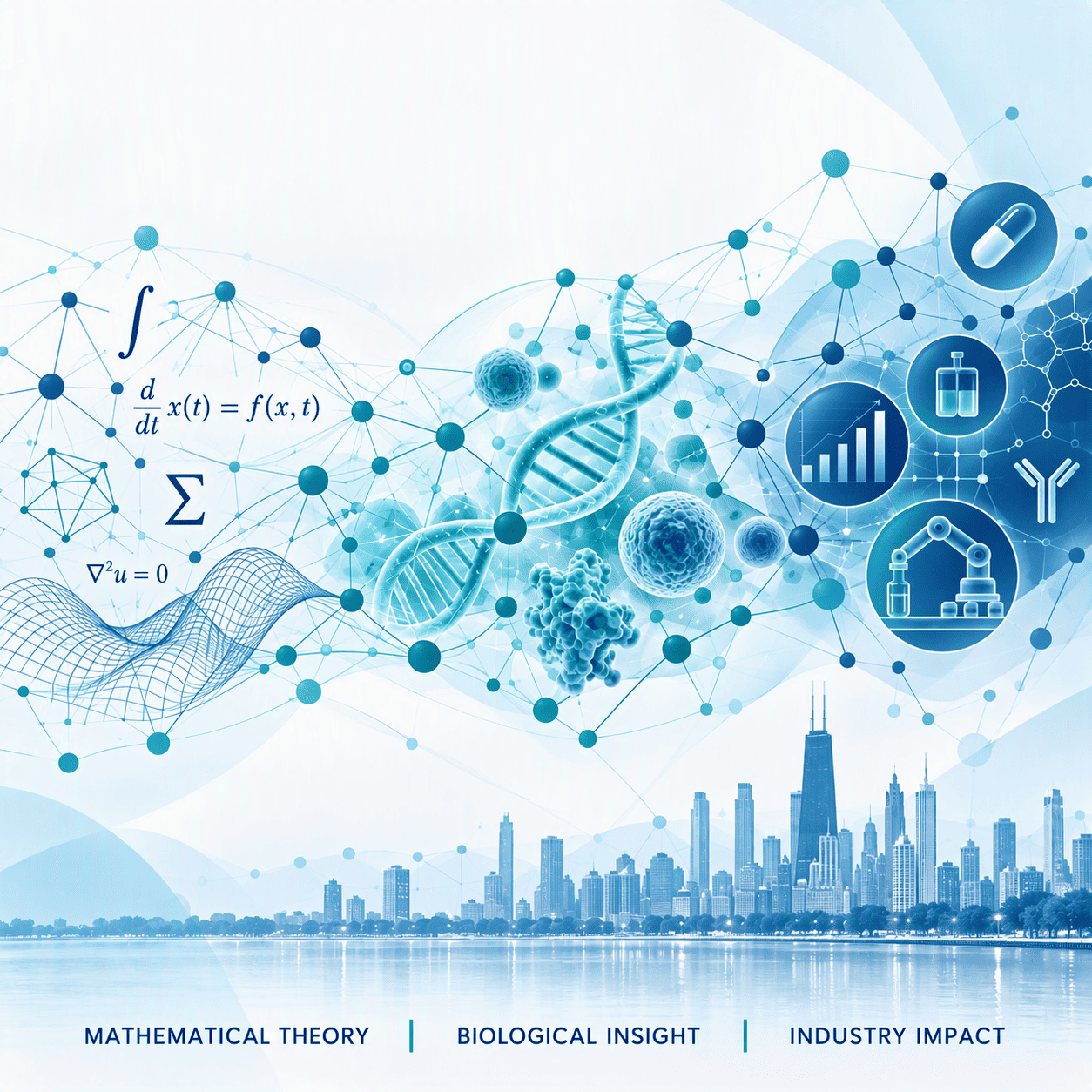
New math for biology — from first principles to real-world problems.
On December 8, 2026, the NSF-Simons National Institute for Theory and Mathematics in Biology (NITMB) invites industry scientists to join our researchers in downtown Chicago for a day of conversations about how our pure research can translate to industrial sectors.
Across biotech, pharma, diagnostics, genomics, and agriculture, the hardest problems often come back to the same core challenges: pulling signal from sparse or noisy measurements, staying accurate in high dimensions, predicting from only a handful of experiments, tracking change over time, linking molecular readouts to phenotype, or choosing the next construct or experiment when the design space is vast. Our researchers work on these very problems — inference, prediction, dynamical systems, uncertainty quantification, and optimization — and our aim at this Exchange is to explore connections between our work and the biological problems and applications of industry.
The day will feature short, accessible lightning talks that situate introducing biological questions and problems, mathematical toolkits, and potential connections to industry. The talks will be grouped into three thematic verticals: Foundations and Shared Toolkits, Agriculture and Biotech, and Human Health. Each vertical will be followed by small-group breakout discussions led by the speakers. We will close with a Science Fair and Reception, creating opportunities for attendees to connect with trainees, learn about their work, and engage with the research community.
What you might take away
The day is built to surface overlap between our methods and your problems. Depending on where you work, you’re most likely to find useful connections in:
- Tools & instrumentation — algorithms that extract biological meaning from complex measurements — separating signal from noise, analyzing spatial or high-dimensional data, predicting how systems change over time.
- Biopharma & biotech R&D — quantitative modeling of cell-state changes, drug response, physiology, or sparse preclinical data.
- Clinical & translational — biomarkers, pathology, or longitudinal patient data — connecting biological measurements to treatment response and disease progression.
- AI diagnostics & precision medicine — biomarker signatures that must replicate across cohorts, or tissue-based models that must generalize beyond training data and hold up under regulatory scrutiny.
- Enabling technologies — structure-aware sequence design, guide or probe optimization, generative sequence libraries, or getting more out of each design–build–test round.
- Synthetic biology & agriculture — predicting function from sequence to guide what to build next, or modeling and controlling microbial populations through scale-up.
Discussion groups will remain small to stay focused and substantive. To optimize this time, come ready to share a problem from your own work, for which current methods fall short.
Speakers and Talks
(More talks to be announced).
FOUNDATIONS / SHARED TOOLKIT
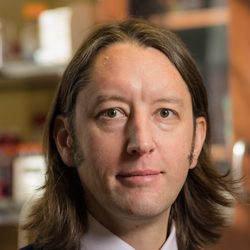
RNA Modeling & Design via Graph Neural Networks
Julius Lucks
Northwestern University
with Risi Kondor
RNA function depends on dynamic folding, which standard models often miss. Graph neural networks encode these folding rules directly, predicting riboswitch function both accurately and interpretably with far fewer parameters. Building on this framework, P-tensors and diffusion models are combined to design new functional RNA sequences, which are then validated experimentally.
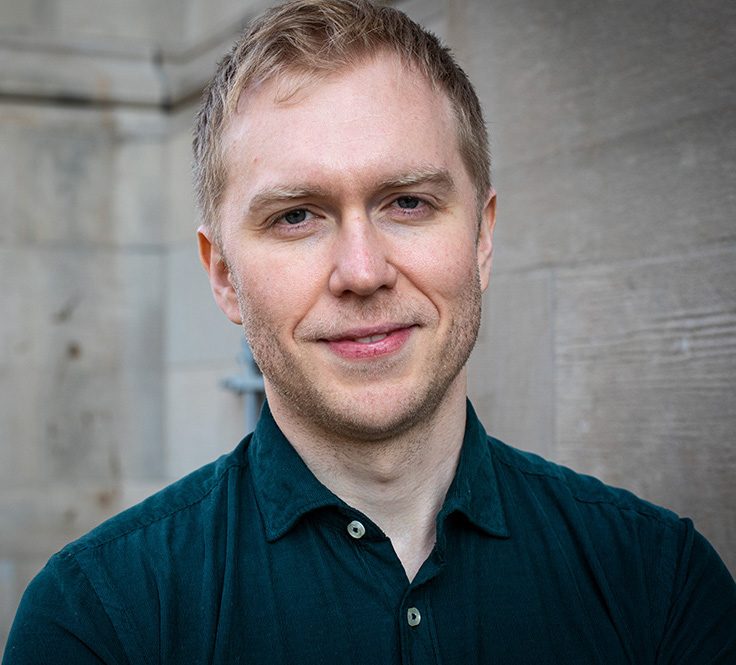
Probabilistic Models for Sparse, Bursty Biological Dynamics
Aaron Schein
University of Chicago
Genes burst, taxa bloom and vanish, and tumors alternate between dormancy and growth—sparse, bursty dynamics that Gaussian tools handle poorly. This project develops practical probabilistic models for these dynamics, with applications in predicting tumor response to unseen treatments.
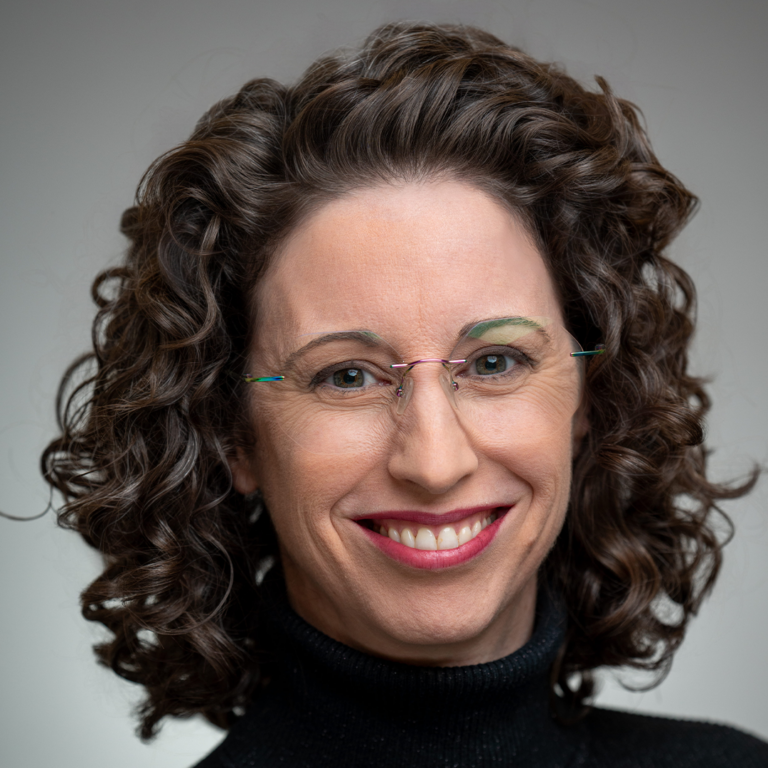
Stabilizing Model Selection
Rebecca Willett
University of Chicago
with Jake Soloff
Model selection is often unstable: dropping a single data point can flip which model gets chosen, threatening reproducibility. This project’s method returns a small set of near-best models rather than a single fragile pick, with a formal stability guarantee, demonstrated on Lotka–Volterra dynamics.
AGRICULTURE / BIOTECH
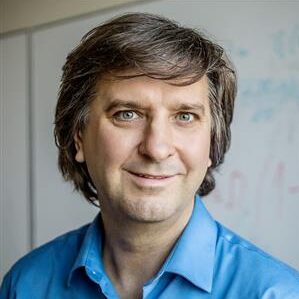
Collective Metabolism and Ecosystem Function
Sergei Maslov
University of Illinois Urbana-Champaign
with Seppe Kuehn
When does a microbial community stay stable, and when does it adapt? Combining consumer-resource modeling with dynamical systems, this project shows how traits like auxotrophy and sequential nutrient use shape resilience and coexistence in fluctuating, “boom-and-bust” environments, with testable predictions.
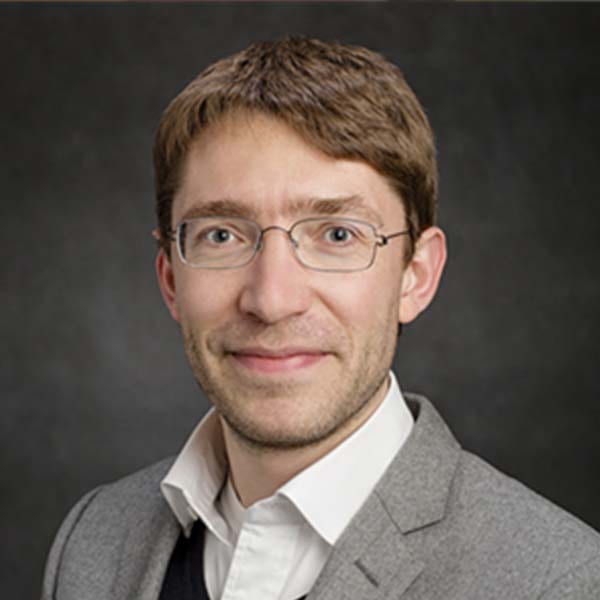
Function-Informed Microbial Communities
Seppe Kuehn
University of Chicago
with Vincenzo Vitelli & Madhav Mani
Sequencing tells us which species are present in a microbial community, but not which functional groups drive its behavior—information critical for engineering probiotics, fermentation cultures, and soil products. A neural network addresses this gap by grouping microbes by function rather than genetic relatedness, while quantifying uncertainty. At a larger scale, work on nitrogen cycling in farmland soil links shifts between growth, stationary, and death phases to environmental conditions such as pH and, ultimately, soil carbon release. More broadly, these approaches show how modeling collective microbial function can enable more predictable and controllable bioprocesses across probiotics, biomanufacturing, and agtech.
HUMAN HEALTH
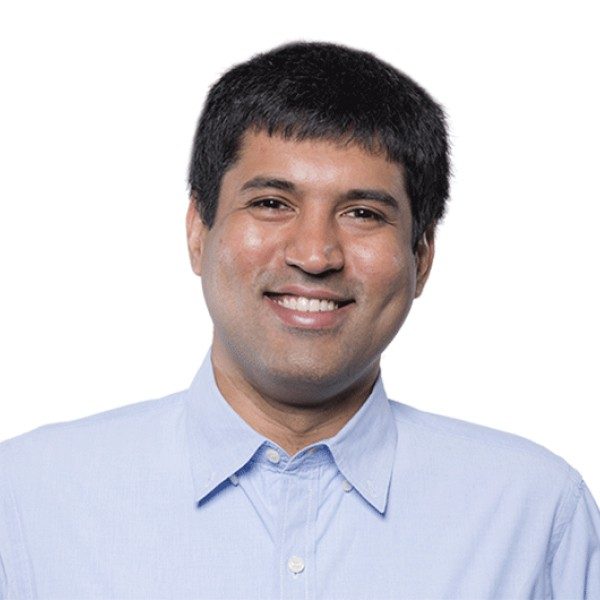
Cell State Dynamics
Suri Vaikuntanathan
University of Chicago
with Yogesh Goyal & Ben Kuznets-Speck
Predicting how high-dimensional cell states respond to perturbations is central to biology. Using statistical physics, CIPHER predicts a cell’s genome-wide responses to genetic perturbations from baseline gene covariance alone (validated across 1M+ cells). Its companion, Keeping SCORE, turns diffusion models into interpretable, calibrated classifiers. Together they enable causal inference and mechanism discovery.
Multi-Organ Glucose Control
Priyathama Vellanki
Emory University
with Ilya Nemenman
Glucose regulation is a control problem spread across physically separated organs. A minimal multi-organ model shows why purely local sensing runs into unavoidable tradeoffs, and how hormones like insulin overcome them. This model is relevant to diabetes and closed-loop insulin-delivery devices.
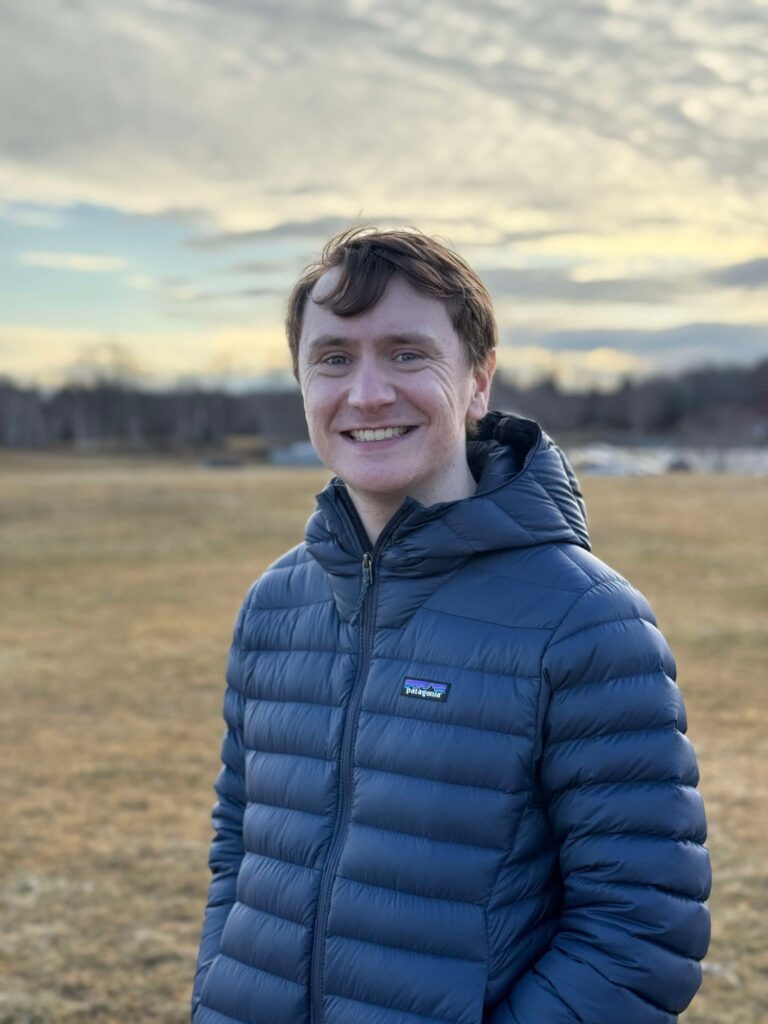
Spatial Biomarkers of Immunotherapy Response
Ryan Robinett
University of Chicago
with Siwei Wang & Alexander Pearson
Immunotherapy response depends on how immune cells are spatially arranged around tumors—something visible in routine histopathology, but difficult to quantify. This project builds spatial graphs that capture both the relationship between cells and their shape, generating interpretable biomarkers of treatment response that could help spare non-responders from unnecessary toxicity.
Schedule
Schedule of talks and conversations (Draft – subject to change).
December 08 2026 Tuesday
9:00 AM - 10:00 AM
Breakfast & socializing
10:00 AM - 10:15 AM
Antonio (Tuca) Auffinger
Opening remarks — academic framing
10:15 AM - 10:30 AM
Michelle Hoffmann
Forward-looking perspective — industry framing
10:30 AM - 11:00 AM
Lightning talks (5min each) — Foundations / Shared Toolkit
Julius Lucks, Aaron Schein, & Rebecca Willett
11:00 AM - 12:00 PM
Breakout discussions + coffee
12:00 PM - 12:30 PM
Lightning talks (5min each) — Agriculture / Biotech
Sergei Maslov & Seppe Kuehn
12:30 PM - 1:00 PM
Breakout discussions
1:00 PM - 2:00 PM
Lunch & socializing
2:00 PM - 2:30 PM
Lightning talks (5min each) — Human Health
Suri Vaikuntanathan, Priyathama Vellanki & Ryan Robinett
2:30 PM - 3:30 PM
Breakout discussions + coffee
3:30 PM - 4:30 PM
Science Fair & reception
RSVP & Travel Information
This event is by invitation. To confirm your place, please register: h̲e̲r̲e̲
NITMB will cover eligible travel expenses, including flight reimbursement, and arrange hotel accommodations for attendees who register by October 31, 2026. For additional information on travel and reimbursement, please see our t͟r͟a͟v͟e͟l͟ g͟u͟i͟d͟e͟l͟i͟n͟e͟s͟.
Questions? Contact Fleur Lebhardt, NITMB, at f͟l͟e͟b͟h͟a͟r͟d͟t͟@͟u͟c͟h͟i͟c͟a͟g͟o͟.͟e͟d͟u͟.