

Chicago, IL 60611 United States


Overview
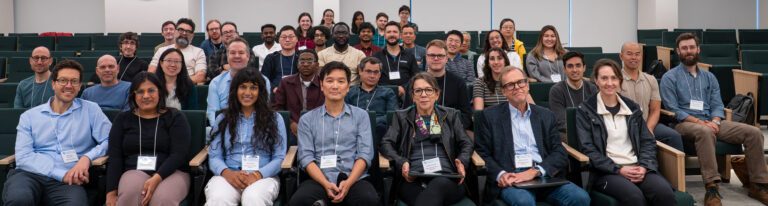
The field of neuroscience is undergoing a transformative era, driven by the convergence of mathematical, computational, and experimental approaches. This workshop explores the intersection between these fields through the lenses of mathematical/computational statistics and numerical analysis.
While the potential impact of these approaches to neurosciences problems is fully recognised, there is still modest cross-fertilization between disciplines. Moreover, bespoke numerical methods must be developed for brain dynamics, to tackle the nonlocality and the nonlinearity of the underlying evolution equations.
Key themes of the workshop include:
• Integrating mathematical models with experimental data.
• Advanced numerical techniques for neural network simulation.
• Numerical analysis of nonlocal and nonlinear neural evolution equations .
• Statistical inference in neurobiological systems.
• Uncertainty quantification in neural dynamics.
• Inverse problem methodologies in neuroscience .
The event is targeted at mathematicians, statisticians, computational scientists, and neuroscience researchers, and will provide a platform for connecting leading experts working in different disciplines and exploring mathematical innovations in these areas.
Schedule
September 28 2026 Monday
8:30 AM - 9:25 AM
Light breakfast
9:25 AM - 9:30 AM
Welcome & Introduction of Institute
9:30 AM - 10:30 AM
Daniela Calvetti
Toward data-driven human brain atlases leveraging inverse problems and data science tools
Brain parcellation of the human brain is an important tool for understanding the role of different cerebral regions during various tasks and states. The subdivisions behind most brain atlases acknowledge the importance of regions supervising specific tasks and align well with the granularity of MRI and fMRI data collection, while may be not well suited for investigations based electrophysiological data collected via EEG or MEG. In this talk we outline how inverse problems and data science tools can be combined toward the design of data atlases sensitive to the electric and magnetic signals of the brain.
10:30 AM - 11:00 AM
Coffee Break
11:00 AM - 12:00 PM
Paul Bogdan
12:00 PM - 1:30 PM
Lunch
1:30 PM - 2:30 PM
Krešo Josić
From Connectomics to Network Dynamics
The structure of neural circuitry shapes population activity. Recent advances in connectomics provide synapse-resolution reconstructions that reveal organization ranging from local wiring motifs to mesoscale modules and pathways. However, we do not fully understand how such structure impacts neural dynamics. I will discuss the multiscale organization of different connectomes, and the theoretical methods that relate the inferred structural statistics to neural dynamics. Theory shows that correlations between reciprocal connections and higher-order cyclic motifs strongly affect stability, dimensionality, dynamical complexity, and transitions between dynamical regimes. Recent findings in mouse visual cortex offer support for these links: pairwise and higher-order wiring rules have been related to population response properties, and strong, localized recurrence and pronounced motifs can determine the dimensionality of cortical activity. These results suggest that connectome reconstructions contain information about the dynamics neural circuits can generate. Extending this framework from local motifs to mesoscale structures may help identify which features are dynamically relevant and clarify how circuit organization supports neural computation.
2:30 PM - 3:30 PM
James Fitzgerald
Inferring Synaptic Connectivity and Plasticity from Neural Activity
Modern neural recordings provide increasingly detailed views of population dynamics, but translating these observations into mechanistic models of synaptic connectivity and plasticity remains a fundamentally under-determined inverse problem. In this talk, I will discuss data-driven approaches for inferring circuit structure and learning rules from neural activity, emphasizing what can—and cannot—be identified from observations alone. I will first consider the geometry of synaptic connectivity inference, where many distinct networks can produce similar activity, and show how model structure and uncertainty can nevertheless yield rigorous constraints on connectivity. I will then describe the challenges associated with inferring stochastic, nonlinear synaptic plasticity rules directly from neural and behavioral trajectories. Finally, I will discuss how whole-brain data and probabilistic model synthesis can discover shared structure across individuals while preserving subject-specific variability. Across these examples, I will argue that successful inference requires combining large-scale data with mechanistic modeling and careful attention to identifiability.
3:30 PM - 5:00 PM
Poster Session (with coffee)
4:30 PM - 6:00 PM
Reception (starts during Posters)
September 29 2026 Tuesday
8:30 AM - 9:25 AM
Light breakfast
9:25 AM - 9:30 AM
Welcome to Workshop & Housekeeping
9:30 AM - 10:15 AM
Daniele Avitabile
Inferring Parameters and States in Neurobiological Networks
The study of cortical dynamics during different states such as decision making, sleep and movement, is an important topic in Neuroscience. Modelling efforts aim to relate the neural rhythms present in cortical recordings to the underlying dynamics responsible for their emergence. We present an effort to characterise the neural activity from the cortex of a mouse during natural sleep, captured through local field potential measurements. Our approach relies on using a discretised Wilson–Cowan Amari neural field model for neural activity, along with a data assimilation method that allows the Bayesian joint estimation of the state and parameters. We demonstrate the feasibility of our approach on synthetic measurements before applying it to a dataset available in literature. Our findings suggest the potential of our approach to characterize the stimulus received by the cortex from other brain regions, while simultaneously inferring a state that aligns with the observed signal.
10:15 AM - 10:45 AM
Contributed Talk 1 - Zhuo-Cheng Xiao
Generative Learning for Parameter Landscape Beyond Low-dimensionality
Parameter landscapes of biological dynamical systems are notoriously difficult to interpret: they are high-dimensional, expensive to explore through simulation, and organized by bifurcations that partition parameter space into regimes with qualitatively distinct dynamics. Consequently, local optimization and low-dimensional parameter sweeps often miss large portions of the viable parameter set and obscure how robustness emerges through interactions among parameters. I present a score-based diffusion framework that learns conditional distributions concentrated near viable parameter manifolds, enabling efficient exploration beyond the dimensionality accessible to exhaustive sweeps. We begin by randomly sampling parameter values and summarizing the long-term behaviors obtained from model simulations. Conditioned on prescribed target behaviors, the diffusion model then generates new parameter values concentrated near the corresponding viable set. We characterize the local geometry of these sets through their intrinsic dimension, tangent spaces, and curvature. These quantities reveal mechanistic properties such as effective degrees of freedom, compensatory parameter directions, and higher-order interactions that collectively shape system behavior. Our results span three dynamical systems: the Lorenz system, the Izhikevich neuron model, and dsODE, our reduced ODE description of spiking neural network dynamics. We identify and analyze viable parameter manifolds in ambient parameter spaces of up to 12 dimensions. Across these examples, generative learning provides a principled and scalable framework for relating parameter-space geometry to mechanism, compensation, and robustness in complex biological models.
10:45 AM - 11:15 AM
Coffee break
11:15 AM - 12:00 PM
Ramon Nartello-Kaluarachchi
Nonequilibrium stochastic dynamics of brain networks
The techniques of complex systems and statistical physics have long been applied to the modelling and analysis of neural systems. Despite this, very little focus has been placed on nonequilibrium physics approaches. Nevertheless, neural systems are characterised by asymmetry and irreversibility, consistent with a process in a nonequilibrium steady-state, and the degree of irreversibility, has been shown to vary in interesting ways between cognitive states. In this talk, I will introduce the mathematical framework of nonequilibrium steady-states, and give a range of applications to neuroscience. First, we will focus on the link between asymmetric network structure and irreversible dynamics, showing that more asymmetry implies more irreversibility. Applying this to fMRI, we will show that the increased irreversibility seen during task stems from more asymmetric effective networks. Next, we will use irreversibility to infer higher-order interactions from neural recordings, showing that this highlights key synergistic relationships in MEG data. Finally, we will focus on asymmetric, recurrent neural networks (RNNs), and the theory of neural manifolds. We will introduce a framework, which allows an RNN to be trained to approximate an arbitrary SDE in a latent subspace, and then show how this can be used to construct more complex models of associative memory. We will link this RNN framework to nonequilibrium steady-states, and introduce decompositions of the RNN based on both its irreversibility and its asymmetry.
12:00 PM - 1:30 PM
Lunch
1:30 PM - 2:15 PM
Federica Milinanni
Enforcing detailed balance in inverse uncertainty quantification of biochemical reaction networks
“Subcellular signaling pathways regulating, e.g., cell division or synapse plasticity, are often modeled as dynamic networks of reactions satisfying the law of mass-action. To remain physically grounded, these models must satisfy the Wegscheider conditions, a form of thermodynamic constraint requiring that the product of reaction rate constants around each reaction cycle is equal in both cycle directions. These constraints lead directly to the law of detailed balance at equilibrium.
Imposing Wegscheider conditions requires identifying all cycles in the network, which can be computationally difficult in large, complex systems. Even when these constraints are explicitly available, they often cause inverse uncertainty quantification methods like MCMC to struggle.
Instead of imposing Wegscheider conditions directly in the parameter space, our approach enforces physical consistency by penalizing parameters that violate detailed balance. By integrating this requirement into the likelihood, we promote inferred dynamics that are thermodynamically consistent, even when limited measurements lead to significant model unidentifiability.”
2:15 PM - 3:00 PM
Chris Oates
Overcoming Model Misspecification in Bayesian Inference of Molecular Signalling Networks
Bayesian inference of molecular signalling networks usually relies on tractability of the marginal likelihood, enabling the set of possible networks to be efficiently explored. As such, linear models with independent errors and conjugate priors are routinely used. However, the dynamics of molecular signalling is nonlinear, and relevant confounders are often unobserved; failure to account for these complexities will almost certainly lead to over-confident inferences in the standard Bayesian framework. To confront this reality, we develop a post-Bayesian approach to inference of molecular signalling networks, guided by the principle that uncertainty should not vanish when the statistical model is misspecified, even if an infinite number of data are observed. On a technical level, we extend the concept of a predictively-oriented (PrO) posterior to the setting of dependent data, empirically investigating the properties of PrO posteriors in the challenging network inference context.
3:00 PM - 3:30 PM
Coffee break
3:30 PM - 4:30 PM
Group Discussions: Numerics
4:30 PM - 5:00 PM
Follow up to the group discussion
September 30 2026 Wednesday
8:30 AM - 9:25 AM
Light breakfast
9:25 AM - 9:30 AM
Welcome to Workshop & Housekeeping
9:30 AM - 10:15 AM
Massimiliano Tamborrino
All in one talk: Modelling, simulation and inference for neuroscience
In this talk, I will show the interplay of stochastic modellings, stochastic numerics and inference for two different type of data: 1) intracellular recordings coming from single neuron dynamics (modeled via the stochastic FitzHugh-Nagumo model); 2) multichannel EEG data before and during epileptic seizures (modeled by a population of stochastic neural mass model, aiming to uncover the underlying brain connectivity). Both models are multivariate non-linear stochastic differential equations (SDEs). Closed-form solutions or exact simulation schemes for the considered SDEs are unavailable, requiring the development of advanced numerical schemes. To this end, I advocate the use of numerical splitting schemes, which are shown to be not only strong convergent, but also capable of preserving important structural properties of the models, such as oscillatory dynamics, hypoellipticity, and geometric ergodicity. The impact of such schemes goes well beyond the numerical level though. Indeed, in this talk I show that inferential approaches (such as maximum likelihood estimation, Approximate Bayesian Computation or controlled Sequential Monte Carlo) based on splitting schemes outperform those based on standard numerical schemes (e.g. Euler-Maruyama) in terms of accuracy and computational speed. Applying our method to real multichannel EEG data, I uncover potential similarities in patients’ brain activities across different epileptic seizures as well as differences between preseizure and seizure periods.
10:15 AM - 10:45 AM
Contributed Talk 2: Heather Cihak
Remember to forget: Balancing encoding and removal mechanisms in working memory
Parametric working memory is maintained through persistent cortical activity and short-term synaptic plasticity in circuits underlying executive control. In delayed estimation tasks, neurons tuned to stimulus features organize activity into localized bumps that predict behavioral responses. Yet memory does not reset cleanly between trials and the mechanisms that stabilize representations leave traces that shape future encoding. Empirical findings are inconsistent, with serial biases ranging from strongly attractive to repulsive across tasks and conditions, suggesting multiple mechanisms could be at play. Here, we develop a model of intertrial dynamics integrating passive noise-driven clearance, task-dependent suppression, memory overwriting, and short-term facilitation. Individually these mechanisms may produce opposing biases, and their interaction determines the net signature of serial dependence. For example, synaptic facilitation echoes prior information, while suppression and fluctuations clear it. Comparing model predictions with behavioral data reveals that apparent memory errors result from a balance of these mechanisms as modulated by the task context.
10:45 AM - 11:15 AM
Coffee break
11:15 AM - 12:00 PM
Zack Kilpatrick
Astrocytic resource dynamics shape neural reliability and adaptivity
Astrocytes recycle neurotransmitters and redistribute metabolic and synaptic resources across neural tissue, yet these processes are largely absent from mathematical models of circuit dynamics. We describe two complementary approaches to modeling how astrocytic resource transport shapes neural computation. First, in a spatially extended neural field model, synaptic resources are depleted by persistent activity, replenished through astrocytes, and redistributed by diffusion. Analysis of stationary bump solutions shows that astrocytic diffusion smooths resource asymmetries and suppresses drift instabilities, enlarging the regime of stable persistent activity. Second, we ask how replenishment should be allocated among synapses with heterogeneous firing demands. Optimizing synaptic reliability yields a generalized matching law in which replenishment tracks local demand, with systematic deviations arising from finite resource constraints and spatially heterogeneous transport. Together, these models connect astrocytic resource dynamics to both population-level memory stability and synaptic reliability.
12:00 PM - 1:25 PM
Lunch
1:25 PM - 1:30 PM
Group Photo
1:30 PM - 2:15 PM
Erkki Somersalo
Spotlight imaging of localized brain activity with EEG/MEG data
Electroencephalography (EEG) and magnetoencephalography (MEG) provide windows to monitor neuronal electromagnetic activity of the brain with a time resolution in the millisecond range. In this talk, we consider a recently introduced technique, called spotlight inversion, in which the goal is to solve a spatially distributed inverse problem over a selected region of interest (ROI) by splitting the signal in two parts, using linear algebraic techniques to project the data and the forward model onto a smaller subspace, thus reducing the non-informative part of the signal, and solving the reduced inverse problem on that subspace. The method has been demonstrated to be effective in other imaging modalities (X-ray tomography, electrical impedance tomography, MRI). in this talk, the potentials of the spotlight technique applied to EEG and MEG are investigated.
2:15 PM - 3:00 PM
James MacLaurin
Delays and Balance in High Dimensional Neuronal Networks
It is well-known that the synaptic processing of action potentials is delayed and stochastic. In this talk I explain how to incorporate synaptic delays into the limiting population density equations in a tractable manner. (The classical Mckean-Vlasov theory for the large population limit of a high dimensional neuronal network is for instantaneous interactions). I study the limiting equations and find spatially-distributed oscillatory patterns. In the second half of the talk, I study balanced equations, such that the net inputs to any neuron diverges with the system size, but there is cancellation between excitatory and inhibitory inputs. I study a system with synaptic delays and stochasticity. In the large size limit, I obtain population density equations coupled to an algebraic constraint that arises from the diverging interaction. The system is thus analogous to slow / fast systems of ODEs. I perform some simulations and outline situaitons where there is oscillatory activity. The first half of the talk concerns joint work with Daniele Avitabile, and the second half is joint with Pedro Vilanova.
3:00 PM - 3:30 PM
Coffee break
3:30 PM - 4:30 PM
Group Discussions: Modelling
4:30 PM - 5:00 PM
Follow up to the group discussion
October 01 2026 Thursday
8:30 AM - 9:25 AM
Light breakfast
9:25 AM - 9:30 AM
Welcome to Workshop & Housekeeping
9:30 AM - 10:15 AM
Brent Doiron
The global geometry of optimal neural representations
Efficient coding hypothesizes that neural activity optimally represents information under certain resource constraints. The global structures of such optimal population codes are difficult to study theoretically, and previous works have usually resorted to either focusing on local properties like fine discrimination or placing unnecessary restrictions on the parametric forms of neural tuning. We tackle this problem by analytically deriving the neural representation that minimizes the all-pairs average classification error of a one-dimensional circular variable under various forms of neural response noise. Our method is based on formulating the space of neural response distributions as a statistical manifold whose geometry can be simplified through a generalized version of variance-stabilizing transformations. The theory fully characterizes the complete family of optimal population codes and allows us to make two novel predictions.
First, an optimal code should allow the existence of oppositely peaked bimodal tuning curves.
Second, there should be a correlation between spiking variability and tuning sharpness.
Both of these predictions are validated in the mouse head direction system.
10:15 AM - 10:45 AM
Contributed Talk 3: Christoffer Alexandersen
Modeling the progression of Parkinson's disease with Bayesian inference methods
Parkinson’s disease is characterized by the spread of pathological proteins throughout the brain, resembling a spreading process on a graph. We model the spreading of these pathological proteins through the brain structural network and infer the model parameters posteriors using Markov chain Monte Carlo methods. We show that the model captures the spreading patterns observed in empirical data and that the inferred model parameters are associated with the expression of genes associated with Parkinson’s disease.
10:45 AM - 11:15 AM
Coffee break
11:15 AM - 12:00 PM
David Cohen
Explicit domain preserving integrators for S(P)DEs
We propose and study explicit time integrators for S(P)DEs having solutions in a hypercube. We provide strong and weak rates of convergence for these domain preserving integrators. We illustrate these results numerically.
The talk is based on joint works with Charles-Edouard Bréhier (Université de Pau et
des Pays de l’Adour) and Gijs Custers (Chalmers University of Technology and University of Gothenburg).
12:00 PM - 1:25 PM
Lunch
1:25 PM - 1:30 PM
Evaluation
1:30 PM - 2:15 PM
Chengcheng Huang
Information propagation in large-scale multi-regional models
Most cognitive processes involve the coordinated activity of multiple brain regions, yet little is known about how these regions interact to support flexible behavior. Mesoscopic connectome databases providing weighted and directed information about interareal connections have recently become available for multiple species, including the macaque monkey, marmoset, and mouse. These databases place quantitative constraints on the structure of large-scale multi-regional models. Here, we analyzed information propagation in a multi-regional model of the macaque brain. We found that stimulus information in visual cortex propagates to frontal regions when the network is in a near-critical dynamical state. Moreover, the strength of local inhibition controls the spatial pattern of propagation through a switch in the network’s dominant singular vectors. These results suggest that proximity to a dynamical instability, tuned by inhibition, is a mechanism by which hierarchical cortex routes behaviorally relevant signals across brain regions.
2:15 PM - 3:00 PM
Stefan Radev
Amortizing Bayesian Statistics in the Age of AI
Ten years of simulation-based inference (SBI) have transformed the way we approach Bayesian inference with complex models. Modern SBI shifts computational effort from repeated, problem-specific inference toward reusable neural engines that can be queried in real time. In this talk, I will survey the modern SBI landscape and discuss new opportunities afforded by score-based models, meta-amortization, and agent-in-the-loop workflows. I will also examine key challenges beyond standard benchmark settings, including large-scale hierarchical modeling, adaptive experimental design, and simulation gaps.
3:00 PM - 3:30 PM
Coffee break
3:30 PM - 4:30 PM
Group Discussions: Data/Interference
4:30 PM - 5:00 PM
Follow up to the group discussion
October 02 2026 Friday
8:30 AM - 8:45 AM
Light breakfast
8:45 AM - 9:30 AM
Daniel Sanz-Alonso
9:30 AM - 10:00 AM
Contributed Talk 4: Kevin Lin
A multiscale approach to modeling cortical circuitry
In this talk, I will describe a class of multiscale, coarse-grained (CG) models of neuronal networks that balance biological fidelity and computational efficiency, suitable for use as forward models in inverse / inference problems. As is typical in CG models, rather than individual cells we focus on the interaction between groups of cells. Dynamics are alternately updated at intra- and inter-group scales, with one informing the other, until equilibrium is achieved on both scales. A novelty is how we exploit the underlying biology: taking advantage of the similarity in local anatomical structures across large regions of cortex, we model intra-group dynamics as a single dynamical system driven by “external” inputs. This enables us to precompute and tabulate all potential local responses, thereby speeding up the updating procedure significantly compared to direct multiscale simulations. This methodology is illustrated using a model of the primate visual cortex.
10:00 AM - 11:00 AM
NITMB Seminar Series: Lai Sang Young
Biology meets math: building a model of primary visual cortex
“In this talk, I would like to use some recent modeling work to illustrate the interaction between mathematics and biology in computational neuroscience. The model in question is a small piece of the primary visual cortex (V1) of the Macaque monkey, whose visual system is very similar to that of humans. Our model is a high dimensional dynamical system capable of reproducing dozens of V1 function and is (to a degree) built to “”compute like the real brain””. I will showcase in this talk a few selected items, e.g. gamma rhythms, orientation selectivity (related to the detection of edges), and direction selectivity (a visual capability implicated in pursuit eye movements). Underlying dynamical mechanisms will be proposed.”
11:00 AM - 11:15 AM
Coffee break
11:15 AM - 12:00 PM
Gabriel Koch
Mean-field dynamics in networks with clustered connectivity and dendritic nonlinearities
“Networks of interconnected neurons display diverse patterns of activity.
Relating these patterns to the structure of the network is a central goal of theoretical neuroscience. Classic neural field and rate models have been powerful tools for this purpose due to their analytical tractability. Here, we show that the recently-developed combinatorial threshold-linear network (CTLN) model is a mean-field theory for excitatory-inhibitory Hawkes networks, with clustered connectivity, in an inhibition-stabilized regime.
This mapping allows us to leverage powerful analytical results for CTLN networks to predict diverse macroscopic dynamics of clustered Hawkes networks, including metastability between various macroscopic fixed points, limit cycles, and chaotic attractors.
We will then examine an extension of this approach to models with nonlinear dendritic dynamics, focusing on dendritic calcium spikes. We uncover a marked point process mean-field theory for these networks, and use this to examine how somatic vs dendritic-targeting connectivity shapes their collective activity.”
12:00 PM - 1:30 PM
Lunch
1:30 PM - 1:45 PM
Closing Remarks & Highlights Reel of the Workshop
Participants
Organizers
- Daniele Avitabile – Vrije Universiteit Amsterdam
- Brent Doiron – University of Chicago
- Daniel Sanz-Alonso – University of Chicago
- Massimiliano Tamborrino – University of Warwick
Speakers
- Paul Bogdan – University of Southern California
- Daniela Calvetti – Case Western Reserve University
- David Cohen – Chalmers University of Technology
- Brent Doiron – University of Chicago
- James Fitzgerald – Northwestern University
- Chengcheng Huang – University of Pittsburgh
- Kresimir Josic – University of Houston
- Zack Kilpatrick – University of Colorado Boulder
- Gabriel Koch Ocker – Boston University
- James MacLaurin – New Jersey Institute of Technology
- Federica Milinanni – Northwestern University
- Ramón Nartello-Kaluarachchi – University of Oxford
- Chris Oates – Newcastle University
- Stefan Radev – Rensselaer Polytechnic Institute
- Erkki Somersalo – Case Western Reserve University
- Lai Sang Young – New York University
Participants
- Christoffer Alexandersen – Yale University
- Logan Becker – Florida State University
- Rachel Bernasconi – University of Surrey
- Stasiu Biber – University of Surrey
- Zara Chandra – University of Colorado Boulder
- Heather Cihak – University of Minnesota Twin Cities
- Ramesh Kumar Devaraj – VIT Vellore
- Lulu Gong – Yale University
- Shahidul Islam – University of Tennessee at Chattanooga
- Youmna Layoun – Temple University
- Huiling Liao – Illinois Institute of Technology
- Cheng Ly – Virginia Commonwealth University
- Sebastian Malagon Perez – Northwestern University
- Afrina Meghla – Temple University
- Udoka Odionyenma – University of Kentucky
- Alyssa Romportl – University of Colorado Anschutz Medical Campus
- Jacob Salisbury – University of Chicago
- Naratip Santitissadeekorn – The University of Surrey
- Farshad Shirani – Emory University
- Cyprien Tamekue – Washington University in St. Louis
- Halima Tonni – University of Lancashire
- Ning Wei – Purdue University
- Hannah Wirtshafter – Northwestern University
- Draco Xu – University of Chicago
- Marium Yousuf – University of Arizona
Recordings
Daniela Calvetti
Recorded on 09/28/2026
Title: Toward data-driven human brain atlases leveraging inverse problems and data science tools
Paul Bogdan
Recorded on 09/28/2026
Title: Inferring the Hidden Dynamics of Living Neuronal Networks: Theoretical Foundations of NeuroAI
Krešimir Josić
Recorded on 09/28/2026
Title: From Connectomics to Network Dynamics
James Fitzgerald
Recorded on 09/28/2026
Title: Inferring Synaptic Connectivity and Plasticity from Neural Activity
Daniele Avitabile
Recorded on 09/29/2026
Title: Inferring Parameters and States in Neurobiological Networks
Zhuo-Cheng Xiao
Recorded on 09/29/2026
Title: Diffusion learning of viable parameter manifolds
Ramon Nartello-Kaluarachchi
Recorded on 09/29/2026
Title: Nonequilibrium stochastic dynamics of brain networks
Chris Oates
Recorded on 09/29/2026
Title: Overcoming Model Misspecification in Bayesian Inference of Molecular Signalling Networks
Massimiliano Tamborrino
Recorded on 09/30/2026
Title: All in one talk: Modelling, simulation and inference for neuroscience
Heather Cihak
Recorded on 09/30/2026
Title: Remember to forget: Balancing encoding and removal mechanisms in working memory
Zack Kilpatrick
Recorded on 09/30/2026
Title: Astrocytic resource transport and the slow timescales of working memory
Erkki Somersalo
Recorded on 09/30/2026
Title: Spotlight imaging of localized brain activity with EEG/MEG data
James MacLaurin
Recorded on 09/30/2026
Title:Delays and Balance in High Dimensional Neuronal Networks
Brent Doiron
Recorded on 10/01/2026
Title: The global geometry of optimal neural representations
Christoffer Alexandersen
Recorded on 10/01/2026
Title: Mathematical modeling of neurodegenerative diseases
David Cohen
Recorded on 10/01/2026
Title: Explicit domain preserving integrators for S(P)DEs
Chengcheng Huang
Recorded on 10/01/2026
Title: Information propagation in large-scale multi-regional models
Stefan Radev
Recorded on 10/01/2026
Title: Amortizing Bayesian Statistics in the Age of AI
Kevin Lin
Recorded on 10/02/2026
Title: A multiscale approach to modeling cortical circuitry
Lai Sang Young
Recorded on 10/02/2026
Title: Biology meets math: building a model of primary visual cortex
Gabriel Koch
Recorded on 10/02/2026
Title: A constructive approach to next-generation neural field theories