Exploring Machine Learning through Optimization and Statistics: a conversation with Vasileios Charisopoulos


The NSF-Simons National Institute for Theory and Mathematics in Biology supports a wide array of investigators driving innovation at the interface of mathematics and biology. NSF-Simons NITMB Affiliate Members bring unique perspectives vital for developing new mathematics and inspiring biological discovery.
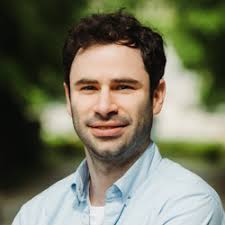
NITMB Affiliate Member Vasileios Charisopoulos, an assistant professor of Electrical and Computer Engineering at the University of Washington, explores the optimization mathematics of machine learning algorithms. His work leverages continuous optimization, high-dimensional statistical estimation, and numerical linear algebra.
We spoke with Vasileios Charisopoulos to learn more about his research, how the nature of biological data pushes the edge of the mathematical canon, and how NITMB’s mission inspires his scholarship.
Can you share with us a big question or problem that you’ve been asking throughout your research? Something that is central to your work?
So, I guess a lot of my research, especially my PhD, was method driven. I looked at optimization algorithms. And I would say the central question was, why do simple algorithms that work actually work? A lot of the algorithms, for example those powering machine learning, are very, very simple. They’re basically one step over and over again, but somehow they work well in practice. Usually there’s problem specific stuff like structure that you can look at to explain why they work well.
What disciplines and/or research topics does your research integrate?
These days [my work is] mostly optimization and statistics. I occasionally draw from other fields, like I might draw from numerical linear algebra if there’s something implementation oriented. There’s a lot of machine-learning these days, especially in the work that I did during my postdoc, but primarily it’s optimization and statistics.
Where do you find your inspiration?
This is a tricky one because I’m very negative person. So I spend, I would say, like 60 percent of my time, being annoyed, complaining, being uninspired or bored. But I think in the end of this process, I eventually get sick of it. Somehow what I want to work on or what is interesting to me has like crystallized in my brain. And when I’m finally at that stage, usually it’s like conversations with other people, or I will see like a talk that’s very inspiring [from] a set of people that I value in my discipline. Basically, what inspires me about them is that they have very simple answers to questions that are difficult to answer. I feel like by going through this process, where I’m annoyed, bored, and frustrated, eventually when the resolution comes, it has to be simple enough for me to get out of that state.
What aspects of the central question/problem you’ve been working on could be interesting to mathematicians/theorists or could be applied to biology?
I feel like some of the structures that you identify when you’re trying to answer the central question in my research, what it ultimately boils down to is there’s some kind of low dimensional structure living in high dimensional space. So, for example, you have many unknown parameters, but very few of them actually influence the solution or near solutions for your mathematical problem. There’s something special happening that doesn’t capture the global behavior of a problem. I feel like at NITMB, in math and biology, there’s already work that’s pointing to that phenomenon, where [there are] complicated landscapes that only a few variables play a really important part.
What about the mission of the NITMB do you find exciting? How do you think the NITMB will enable, inspire, and/or remove barriers for your research program?
I think the thing about the mission is that, well, of course, it’s very ambitious, right? Because it’s life sciences and biology and that always sounds very grand, it sounds very important to answer. I think it’s also good for somebody method driven like me, or a theoretician. It’s very interesting, because it’s one of those fields that basically challenge the canon of optimization and statistics. In biology, sample sizes are limited. Landscapes are complicated. All the problems have very different behavior depending on what point of view you look at them from. Whereas I feel like the canon in optimization statistics is that all problems are convex, so they’re easy to solve with an optimization algorithm. You can take as many samples as you want. You know, like there’s a lot of simplifications that basically make up what we call modern statistics, and this is slowly changing. One of the main drivers is machine learning, but the other main driver are some of these domain sciences that you can’t really give serious answers from the point of view of math, unless you engage with these questions seriously.
I’ve talked to a few people [through NITMB] while I was in Chicago as a postdoc. And it’s just useful to have these questions lying around. In my, in my personal experience, I can’t always contribute to them, but I feel like seeing what kinds of methods people are looking into is very, very useful to me.
What career achievement are you most proud of?
That’s not exactly a career achievement of mine, but when I was a postdoc at UChicago, I felt like a lot of the PhD students that I interacted with or co-mentored got really amazing postdocs. I feel a little bit proud about that.
Outside of your research, what other interests do you have?
I listen to a lot of music. I play music myself, electric and acoustic guitar since high school. I like standup comedy. I’m something of a class clown. I don’t know, I like a slow day, basically. I like the days where I do nothing and mostly meet friends or take walks. Yeah, I enjoy pauses basically. Those are the best types of days.
What are you hoping to work on in the future? Any research, collaborations, etc. you are interested in?
I guess [this is a] cliche answer, but there are questions that I’m working on with my graduate students that I’m excited to continue. There are some questions about integrating machine learning with classical signal reconstruction methods, we recently made some advancements there. We’ve also started working on over-parameterization, which is when you have a problem that really depends on a few variables, but you are actually using a much more complicated model to fit to that problem or to the data that you’ve collected about that problem. We recently had some results on a very classical statistics problem related to overparameterization, and I’m excited to take them further.
Is there anything else you would like the NITMB community to know about you?
I’m in Chicago more often than you think. I’m usually around one week a month.
More information on Professor Charisopoulos’ work is available on his website. Prospective students are encouraged to apply to the UW ECE PhD program and to mention the Charisopoulos lab in their application.