The NSF-Simons National Institute for Theory and Mathematics in Biology comprises a wide array of investigators driving innovation at the interface of mathematics and biology. NSF-Simons NITMB Affiliate Members bring unique perspectives vital for developing new mathematics and inspiring biological discovery. One such NITMB Affiliate Member utilizing statistical and mathematical methods to expand our understanding of biological mechanisms is Guanao Yan.
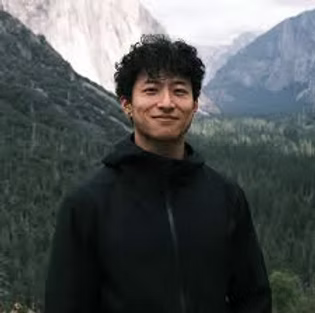
Guanao Yan is an Assistant Professor in the Department of Computational Mathematics, Science and Engineering (CMSE) at Michigan State University. Yan’s research sits at the intersection of statistics, computation, and biology, with a focus on developing quantitative models for single-cell and spatial omics data.
What is a big question you’ve been asking throughout your research?
“The central question in my work is: How can we use rigorous statistical and mathematical methods to quantify biological mechanisms from modern omics data in a way that is both interpretable and useful for biomedical research? More specifically, we study the relationship between organismal phenotypes and the central dogma through genomic, transcriptomic, and proteomic signals measured at cellular resolution and in spatial tissue context.”
“My work integrates statistics, applied mathematics, machine learning / AI, computational biology, and genomics. On the biology side, we work with single-cell omics, spatial transcriptomics, and emerging spatial multi-omics technologies. On the quantitative side, we develop methods in statistical modeling, latent factor modeling, high-dimensional inference, simulation, and benchmarking to make these data more interpretable and more useful for biomedical discovery.”
Where do you find inspiration?
“I find inspiration from two directions. First, I’m inspired by how quickly experimental technologies are improving — especially single-cell and spatial omics — because they allow us to measure biology at a scale and resolution that was not possible before. Second, I’m inspired by the power of mathematics, statistics, and AI to uncover hidden structures in complex data and turn measurements into mechanistic insight. I’m especially motivated when a mathematical idea helps answer a biological question that matters.”
“I think the exciting part is that this problem naturally creates a two-way exchange between mathematics and biology. For mathematicians and theorists, biological omics data raise fundamental questions about high-dimensional structure, multi-scale dependence, compositionality, identifiability, spatial dependence, noise modeling, and uncertainty quantification. These are not just technical details — they are core theoretical challenges. For biology, solving these problems well can improve how we identify cell states, spatial organization, regulatory programs, and disease mechanisms. In other words, better theory can directly lead to better biological interpretation.”
What excites you about NITMB?
“What excites me most about the NITMB is its mission to build a collaborative community that develops new mathematics while uncovering the ‘rules of life’ through theory, data-informed models, and computational/statistical tools. That framing is very aligned with how I think about research. I’m also excited by NITMB’s emphasis on close interaction between theorists and experimentalists, and workshop formats that prioritize discussion, tutorials, and collaboration-building rather than only formal talks. That kind of environment can remove a major barrier in interdisciplinary research: the gap between method development and real biological problems. For my lab, NITMB could be a place to refine mathematical questions inspired by single-cell and spatial omics, build collaborations across disciplines, and develop more principled, generalizable tools for biomedical data analysis.”
What career achievement are you most proud of?
“I’m most proud of building a research program that connects rigorous statistical thinking with real biological and biomedical questions. A big part of that is not just developing methods, but also building tools, simulations, and evaluation frameworks that help ensure the methods are trustworthy and reproducible. I’m also very proud of the mentoring side of my work — helping trainees grow into independent researchers who can move comfortably across statistics, computation, and biology.”
Outside of your research, what other interests do you have?
What are you hoping to work on in the future?
“In the future, I hope to build a more unified statistical and mathematical framework for spatial multi-omics, especially for connecting molecular measurements with tissue morphology and disease phenotypes. I’m particularly interested in collaborations with:
-
mathematicians/theorists working on identifiability, inverse problems, and structured latent models,
-
computational scientists developing scalable algorithms,
-
and biologists/clinicians working on cancer, development, and aging.
Long term, my goal is to translate omics-side discoveries into biomedical impact — including biomarker discovery, disease prediction, and improved therapeutic development.”
Is there anything else you would like the NITMB community to know about you?
Related Posts