
Chicago, IL 60611 United States


Overview
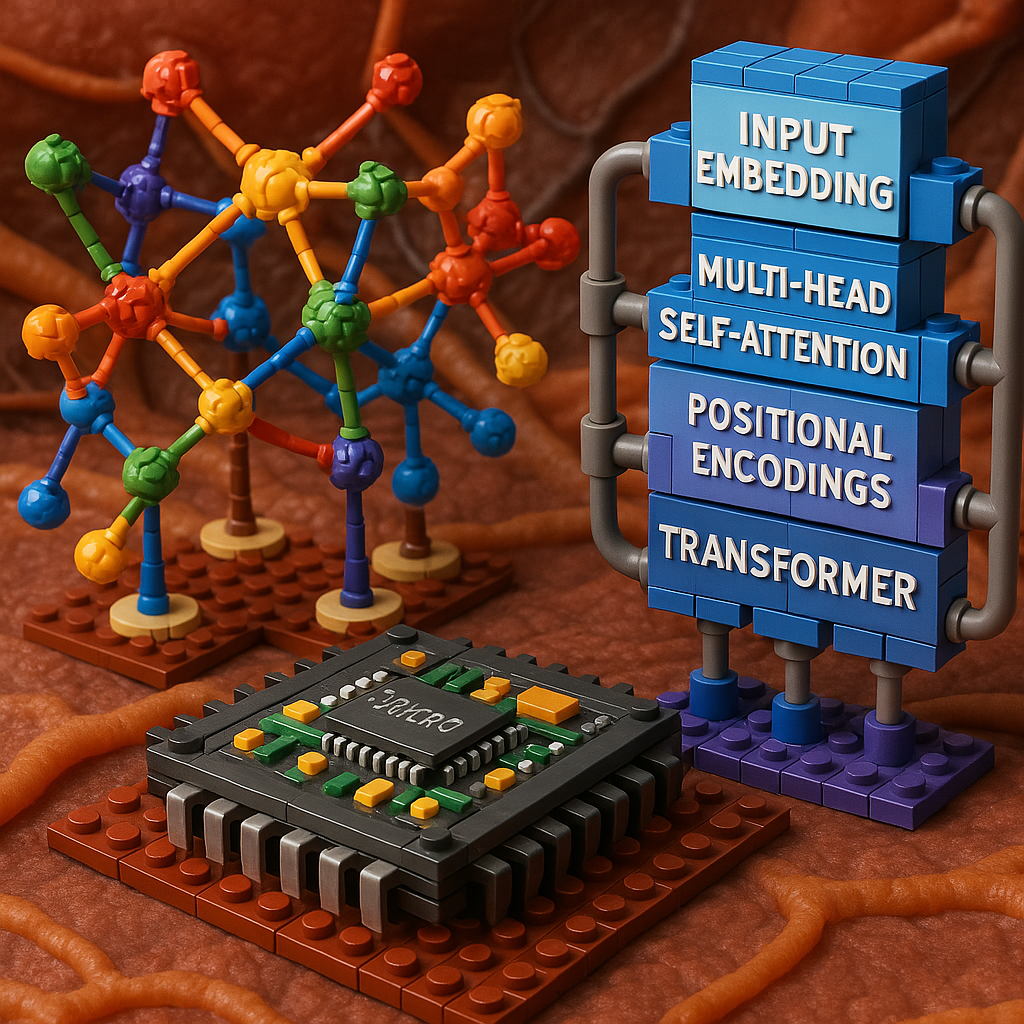
The hypothesis that biological systems exhibit a modular structure is widely accepted. Beyond being a “fundamental law of biology,” it has the potential for important applications, for instance in biomedicine and synthetic biology. It could also serve as an organizational principle for the analysis of high-dimensional complex -omics datasets. However, there is currently no widely accepted definition of what comprises a biological “module”. There is also a lack of foundational research on modularity at both the theoretical and applied level. To address this problem, the proposed workshop will bring together an interdisciplinary group of researchers from biology, modeling, mathematics, and fields outside of biology that currently use the modularity concept, such as engineering and computer science. Participants will work collaboratively to outline a research program consisting of a set of specific research projects that will deliver a rigorous basis for theoretical, technical, and applied research in this field.
Schedule
April 13 2026 Monday
8:30 am - 8:55 am
Breakfast
9:00 am - 9:15 am
Welcome to Workshop & Housekeeping
9:15 am - 10:00 am
Reinhard Laubenbacher
Toward a research program for modularity of biological systems
10:00 am - 10:15 am
Coffee
11:00 am - 11:45 am
Konstantin Mischaikov
Testing Modularity
Abstract: Modularity is ubiquitous, but it is the ubiquity that makes it difficult to conceive of an actionable definition. With this in mind I will discuss a framework in which we can try to test for modularity, i.e., decide on the usefulness of declaring something to be a module. I will restrict my attention to regulatory networks associated with systems biology. In this setting I view modules as control units that produce phenotypes such as single states, e.g., homeostasis; distinct states, e.g., a switch; or a well defined dynamic process, e.g., cycles. As control units modules must be responsive to changes in the environment. I will consider the simplest setting where the external environmental is static, i.e., can be represented as a choice of parameter. The framework that I will discuss is based on combinatorial and algebraic structures that in principle given a regulatory network allows us to rigorously and systematically carry out three vital tests: (1) is the network capable of producing the desired function, (2) how robust is this function with respect to parameters, and (3) how can the behavior of the module be modified either by changing parameters or by altering the regulatory network. My hope is that quantitive answers to these three questions will allow a user to determine the usefulness of viewing a network as a module.
11:45 am - 12:15 pm
Discussion
12:15 pm - 1:15 pm
Lunch
1:15 pm - 2:00 pm
H. Steven Wiley
Identifying properties of biological modules by reverse-engineering a signaling network
2:00 pm - 2:45 pm
Joseph Hellerstein
A mathematical model for the modularity of mechanistic models of chemical networks
2:45 pm - 3:15 pm
Discussion
3:15 pm - 3:30 pm
Coffee
3:30 pm - 5:00 pm
Organization
April 14 2026 Tuesday
8:30 am - 8:55 am
Breakfast
9:00 am - 9:45 am
Nitin Baliga
Conditional Modularity of Gene Networks Underpins Phenotypic Plasticity in Biological Systems
9:45 am - 10:00 am
Coffee
10:00 am - 12:00 pm
Working Groups
12:00 pm - 1:00 pm
Lunch
1:00 pm - 1:45 pm
Gary An
Multi-hierarchical modularity, evolution, (non)identifiability and (non)composability: implications on developing and evaluating new drugs and therapies
1:45 pm - 2:30 pm
Chris Kapulkin
Towards category-theoretic foundations of modularity
2:30 pm - 3:00 pm
Discussion
3:00 pm - 3:15 pm
Coffee
3:15 pm - 5:00 pm
Working Groups
5:00 pm - 6:30 pm
Reception
5:30 pm - 6:00 pm
Poster Session
April 15 2026 Wednesday
8:30 am - 8:55 am
Breakfast
9:00 am - 9:45 am
Uri Alon
Modularity varying goals can generate modular structure
9:45 am - 10:00 am
Coffee
10:00 am - 10:45 am
Atsushi Mochizuki
Topological Origin of Modularity in Chemical Reaction Networks
10:45 am - 11:00 am
Discussion
11:00 am - 12:00 pm
Working Groups
12:00 pm - 1:00 pm
Lunch
1:45 pm - 3:00 pm
Working Groups
3:00 pm - 3:15 pm
Coffee
3:15 pm - 4:15 pm
Working Groups
4:15 pm - 5:00 pm
Luis M. Rocha
Redundancy shapes the dynamical modularity of biochemical regulation
April 16 2026 Thursday
8:30 am - 8:55 am
Breakfast
9:00 am - 9:45 am
Dani Bassett
Architectural and functional modularity in neural systems
9:45 am - 10:00 am
Coffee
10:00 am - 10:45 am
Giri Kalamangalam
Modularity and time scales in human epilepsy neuroscience
10:45 am - 11:00 am
Discussion
11:00 am - 12:00 pm
Working Groups
12:00 pm - 1:00 pm
Lunch
1:00 pm - 1:45 pm
Krishna Manoj
From Modularity to Context-Dependence and Back
1:45 pm - 3:00 pm
Presentations of Working Groups
3:00 pm - 3:15 pm
Coffee
3:15 pm - 5:00 pm
Panel with Speakers
April 17 2026 Friday
8:30 am - 8:55 am
Breakfast
9:00 am - 10:00 am
Discussion of Modularity Research Program
10:00 am - 11:00 am
Reinhard Laubenbacher
NITMB Seminar Series: Modularity in Biological Systems: A Research Program
11:00 am - 12:00 pm
Working Groups finalize reports/scribes finalize presentation notes
12:00 pm - 1:00 pm
Lunch
1:00 pm
Workshop Adjourns
Participants
Organizers
Reinhard Laubenbacher – University of Florida
Konstatin Mischaikov – Rutgers University
Herbert M. Sauro – University of Washington
H. Steven Wiley – Pacific Northwest National Laboratory
Speakers
Uri Alon – Weizmann Institute of Science
Gary An – University of Vermont
Nitin Baliga – Institute for Systems Biology
Dani Bassett – University of Pennsylvania
Joseph Hellerstein, University of Washington
Giridhar Kalamangalam – University of Florida
Krzysztof Kapulkin – University of Western Ontario
Atsushi Mochizuki – Kyoto University
Krishna Manoj – Massachusetts Institute of Technology
Luis Rocha – State University of New York at Binghamton
Jan Skotheim – Stanford University
Participants
Pantelis Andreou – Dalhousie University
Steven Andrews – University of Washington, Dept. of Bioengineering
Oluwatosin Babasola – University of Georgia
Sai Bavisetty – University of California, Los Angeles
Daniel Carranza, John Hopkins University
Adittya Chaudhuri – Indian Statistical Institute-Kolkata, Machine Intelligence Unit
Angela Cintolesi Makuc – Pacific Northwest National Laboratory
Daniel Cruz Ortega – California Polytechnic State University, San Luis Obispo
Arya Desai – Northwestern University
Hyrum Diesen – University of Utah
Elena Dimitrova – California Polytechnic State University, San Luis Obispo
Bernardo Do Prado Rivas – University of Toledo
Robert Eisenberg – Rush University
Song Feng – Pacific Northwest National Laboratory
Kevin Flores – North Carolina State University
Luis Fonseca – University of Florida
Marcio Gameiro – Rutgers University
Tomas Gedeon – Montana State University
Ahana Ghosh – Iowa State University
Sagnik Ghosh (Northwestern University)
James Glazier – Indiana University
Dan Guralnik – Ohio University
Cristian Huepe – Northwestern University
Selva Rupa Christinal Immanuel – Institute for Systems Biology
Claus Kadelka – Iowa State University
William Kalies – University of Toledo
Nathan Kershaw – University of Western Ontario
Kemal Keseroglu – Northwestern University
Istvan Kovacs – Northwestern University
Suman Satish Kulkarni – University of Pennsylvania
Dongheon Lee – FAMU-FSU School of Engineering
Dongyang Li – California Institute of Technology
Ruodan Liu, Iowa State univeristy
David Murrugarra – University of Kentucky
Udoka Odionyenma – University of Kentucky
Kayode Oshinubi – Northern Arizona University
Ertugrul Ozbudak – Northwestern University
Virginia Pasour – U.S Army Research
Daniel Plaugher – University of Kentucky
Erzsebet Regan – The College of Wooster
Ankita Roychoudhary – Northwestern University
Jordan Rozum – Pacific Northwest National Laboratory
Chandel Singh – Northwestern Univeristy
Farshad Shirani – Emory University
Luis Sordo Vieira – University of Florida
Brandilyn Stigler – Southern Methodist University
Sandra Annie Tsiorintsoa – University of Florida
Shailja Tripathi – University of Kentucky
Alan Veliz-Cuba – University of Dayton
John Wang – Harvard University
Matt Wheeler – University of Florida
Shicong Xie – Stanford University
Polly Yu – University of Illinois Urbana-Champaign
Ran Zhou – University of Chicago
Qianze Zhu – Harvard University
Recordings
Reinhard Laubenbacher
Recorded on 04/13/2026
Title: Toward a research program for modularity of biological systems
Herbert M. Sauro
Recorded on 04/13/2026
Title: Modularity as a dynamic and functional phenomenon
Konstantin Mischaikov
Recorded on 04/13/2026
Title: Testing Modularity
H. Steven Wiley
Recorded on 04/13/2026
Title: Identifying properties of biological modules by reverse-engineering a signaling network
Joseph Hellerstein
Recorded on 04/13/2026
Title: A mathematical model for the modularity of mechanistic models of chemical networks
Nitin Baliga
Recorded on 04/14/2026
Title: Conditional Modularity of Gene Networks Underpins Phenotypic Plasticity in Biological Systems
Gary An
Recorded on 04/14/2026
Title: Multi-hierarchical modularity, evolution, (non)identifiability and (non)composability: implications on developing and evaluating new drugs and therapies
Chris Kapulkin
Recorded on 04/15/2026
Title: Categorical Approach to Modularity
Uri Alon
Recorded on 04/15/2026
Title: Modularity varying goals can generate modular structure
Atsushi Mochizuki
Recorded on 04/15/2026
Title: Topological Origin of Modularity in Chemical Reaction Networks
Jan Skotheim
Recorded on 04/15/2026
Title: The Modular Organization of Eukaryotic Cell Growth
Luis M. Rocha
Recorded on 04/15/2026
Title: Redundancy shapes the dynamical modularity of biochemical regulation
Dani Bassett
Recorded on 04/16/2026
Title: Architectural and functional modularity in neural systems
Giri Kalamangalam
Recorded on 04/16/2026
Title: Modularity and time scales in human epilepsy neuroscience
Krishna Manoj
Recorded on 04/16/2026
Title: From Modularity to Context-Dependence and Back
Reinhard Laubenbacher
Recorded on 04/17/2026
Title: A roadmap for a quantitative foundation for modularity in biological systems