Developing mathematical tools to drive biological discovery: A conversation with Guowei Wei


The NSF-Simons National Institute for Theory and Mathematics in Biology is composed of investigators at the forefront of innovative research at the interface of mathematics and biology. NSF-Simons NITMB Affiliate Members bring unique perspectives vital for developing new mathematics and inspiring biological discovery. One such NITMB Affiliate Member driving innovation in mathematics to expand our understanding of biology is Guowei Wei.
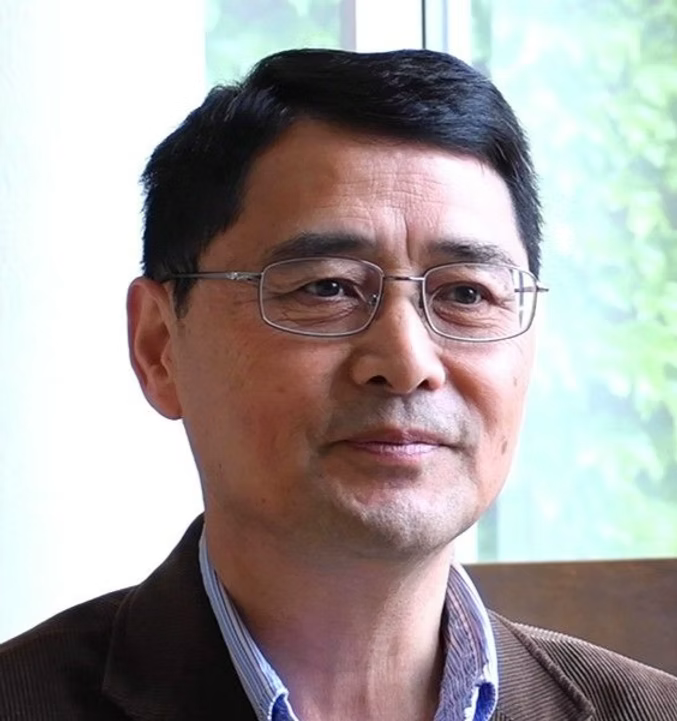
Guowei Wei is an MSU Foundation Professor of Mathematics and Biochemistry and Molecular Biology at Michigan State University. His research focuses on mathematical molecular bioscience and biophysics.
We spoke with Guowei Wei to learn more about his work developing mathematical tools to advance biological discovery.
What is a big question you’ve been asking throughout your research?
“My research concerns the mathematical foundations of biological sciences. Over the past several centuries, mathematics has evolved from a descriptive aid to the central language, structure, and engine of scientific discovery, shaping and being shaped by the advances of the physical sciences. However, modern mathematics departed from modern biology since the 1930s. Most mathematicians know little about modern biological disciplines—such as molecular-level disciplines, cellular and developmental disciplines, and organismal disciplines—while most biologists know little about modern mathematics, including advanced geometry, topology, algebra, analysis, and combinatorics. My research focuses on developing tools rooted in modern mathematics to understand and advance modern biology.”
What disciplines does your research integrate?
“My research integrates modern mathematics, artificial intelligence (AI), and molecular-level biological disciplines and microbiology & infection biology. Specifically, we develop algebraic, differential, and geometric topologies, differential geometry, combinatorial spectral theory, and commutative algebra-based interpretable AI models for tackling challenging problems in drug discovery, virus evolution, protein engineering, single cell biology, etc.”
Where do you find inspiration?
“Biology to mathematics today is the same as quantum mechanics to mathematics a century ago. Quantum mechanics inspired a century of modern mathematics, and biology will usher in bio-inspired mathematics for the coming century.”
What aspects of your work could be interesting to mathematicians or applied to biology?
“One of our research tasks is to develop innovative mathematical tools rooted in a wide range of modern mathematical fields, including commutative algebra, differential geometry, geometric algebra, and algebraic, differential, and geometric topologies. Another research task is to apply new mathematical tools to modeling, analysis, and prediction of biological sequences, structures, dynamics, and function. We are interested in addressing biological challenges arising from intricate complexity, high dimensionality, nonlinearity, and multiscale nature in drug discovery, viral infection, protein design, and spatial transcriptomic data.”
What about the NITMB do you find exciting?
“The mission of the NITMB is ‘to create a nationwide collaborative research community that will generate new mathematical results and uncover the “rules of life” through theories, data-informed mathematical models, and computational and statistical tools.’ This mission aligns perfectly with my own research goals.”
What career achievement are you most proud of?
“A hallmark of my contributions includes leading a team that consistently ranked as the top performer in the D3R Grand Challenges, an annual global competition in computer-aided drug design involving leading academic and pharmaceutical industry researchers. Our success in these challenges reshaped the biological community’s perception of advanced mathematics, prompting collaborations with major biopharmaceutical companies such as Pfizer and Bristol-Myers Squibb (BMS). Furthermore, my team integrated AI, biophysics, bioinformatics, genotyping, experimental data, and advanced mathematics to accurately predict critical SARS-CoV-2 mutational sites (e.g., positions 452 and 501 on the spike protein) in early 2020, months before these mutations emerged in dominant variants like Alpha, Beta, Delta, and Omicron (https://doi.org/10.1016/j.jmb.2020.07.009). By analyzing over 150,000 viral genomes in 2020 and millions in 2021, we identified viral evolutionary mechanisms, including natural selection through infectivity-enhancing mutations and antibody resistance adaptations. Leveraging these insights, my team predicted the rise of Omicron subvariants (BA.2, BA.4/BA.5), their vaccine breakthrough potential, and antibody resistance approximately two months in advance (https://doi.org/10.1016/j.compbiomed.2022.106262). Mathematically, my team and I first introduced topological deep learning as a new frontier for rational learning in 2017 (https://doi.org/10.1371/journal.pcbi.1005690), and persistent spectral theory in 2019 (https://doi.org/10.1002/cnm.3376) and evolutionary Khovanov homology in 2024 (Evolutionary Khovanov homology) as new paradigms for data science and machine learning. We also introduced commutative algebra as an unprecedented approach for biological data in 2025.”
Outside of your research, what other interests do you have?
“I am committed to fostering a new generation of young researchers who excel in both modern mathematics and modern biology.”
What are you hoping to work on in the future?
“I am interested in collaborating with mathematicians and biologists on addressing real challenges in biological/life sciences, particularly those in drug discovery, viral infection, protein engineering, and spatial transcriptomic data.”
Anything else you would like the NITMB community to know about you?
“Differential geometry-based multiscale models were pioneered by my team in 2010 to integrate macroscopic continuum fluid dynamics and microscopic atomistic descriptions for aqueous biomolecular systems (https://doi.org/10.1007/s11538-010-9511-x). Using surface theory and geometric flows, I unified multiscale free energy functionals to derive coupled equations: Laplace-Beltrami, generalized Navier-Stokes, Poisson(-Boltzmann), and molecular dynamics. This approach bridges micro-macro interfaces via potential-driven geometric flows, extending to electrohydrodynamic, ion channels, and large complexes via fluid-electro-elastic models, replacing costly molecular dynamics with elasticity formulations.
My former student Zheng and I also pioneered the Poisson-Boltzmann-Nernst-Planck (PBNP) model, in 2011 (https://doi.org/10.1063/1.3581031). This model employs mean-field approximations and continuum electrostatics to describe the transport of multiple ions in semiconductors, nanofluidics, and biomolecular systems. PBNP overcomes the challenge of the Poisson-Nernst-Planck (PNP) model in the requirement of solving a separate Nernst-Planck equation for each ionic species in multi-ion systems.”
More information about Guowei Wei’s work is available on Professor Wei’s website and Google Scholar.
Related Posts