
NITMB Visitor Program

The NSF-Simons National Institute for Theory and Mathematics in Biology invites researchers to apply to visit NITMB. The goal of this program is to enhance collaborations between biological and mathematical scientists and to stimulate creative thinking and interdisciplinary science. The NITMB Visitor Program allows visitors from outside Northwestern University and the University of Chicago to engage deeply with NITMB.
NITMB is flexible in how it supports research at the interface between mathematics and biology. Examples based upon past visitor participation are given below. If these programs do not precisely fit your needs, please let us know how we can support you.
Example visitor scenarios:
-
Short- or long-term stays for faculty, from a few days to 6 months.
-
Visits of postdoctoral scholars and PhD candidates for the purpose of embedding with NITMB researchers to learn new techniques and lasting anywhere between a week and a full quarter.
-
Recurring local visitors for Chicagoland scholars wishing to engage in NITMB activities on a regular cadence, such as once a week, with a flexible approach that can meet the needs of faculty of teaching-intensive institutions.
-
Post-workshop synthesis meetings, in which past NITMB workshop participants return to NITMB to continue work on a project catalyzed at the workshop or prepare, for example, a review article or perspective piece on a workshop topic. We envision such synthesis meetings taking place within the year following a workshop to continue an emerging research enterprise.
In addition, NITMB Focused Research Group Awards are available. This program welcomes small groups of participants (e.g., 3 to 6) scholars from multiple institutions to gather at NITMB for up to 9 days to focus intently on an independent, ambitious joint research project at the interface between mathematics/theory/computation and biology. These teams may apply to return to continue their research. Please see the NITMB Research page for more information about this program.
Please note that non-U.S. citizens will need to obtain an appropriate visa or visa waiver and the purpose and duration of their visit will be limited to what the specific type of visa allows. Most international visitors will visit NITMB with a WB visa waiver or B-1 visa, which allows independent research or independent academic collaborations and durations of up to 3 or 6 months. In addition, it is very important for international visitors to be covered by health insurance while in the U.S. NITMB does not provide health insurance for visitors. More information is available as part of the application process.
NITMB Visitors

Ben-Gurion University
Dates of Visit(s): 5/20/26-5/24/26
Prof. Ehud Meron received his Ph.D. in nonlinear physics from the Weizmann Institute of Science. He joined Ben-Gurion University in 1994 after three years of postdoctoral research at the University of Chicago and Columbia University and another three years as a visiting professor in the Department of Mathematics of the University of Arizona. Ehud is an expert in the mathematical theory of pattern formation and front dynamics. He has contributed to the understanding front dynamics in reaction-diffusion systems, highlighting the roles front instabilities play in initiating growth patterns and nurturing complex spatiotemporal behaviors. Later, Ehud started applying his expertise to vegetation pattern formation in drylands, building a platform of mathematical models to study the spatiotemporal dynamics of water-limited plant communities. He has made pioneering contributions to the modeling and understanding of the positive feedback loops that drive vegetation pattern formation, the multitude of regular, localized, and irregular patterns that emerge along environmental gradients, and their implications for biodiversity and ecosystem function. Recently, Ehud and his partners won an ERC-Synergy grant to study pathways of resilience and evasion of tipping in drylands, savannas, and tundra. Ehud is the author of the monograph Nonlinear Physics of Ecosystems (CRC 2015).

George Washington University
Dates of Visit(s): 4/20/26-4/24/26
Keith A. Crandall, PhD is the Founding Director of the Computational Biology Institute and Professor in the Department of Biostatistics and Bioinformatics at George Washington University. Professor Crandall studies the computational biology, population genetics, and bioinformatics, developing and testing methods for DNA sequence analysis. He applies such methods to the study of the evolution of both infectious diseases (especially microbiome diversity) and crustaceans (especially Decapod crustaceans). Professor Crandall has published over 350 peer reviewed publications, as well as three books. He has been a Fulbright Visiting Scholar to Oxford University and an Allen Wilson Centre Sabbatical Fellow at the University of Auckland. Professor Crandall has received a number of awards for research and teaching, including the American Naturalist Society Young Investigator Award, an NSF CAREER Award, a PhRMA Foundation Faculty Development Award in Bioinformatics, Honors Professor of the Year award at Brigham Young University, ISI Highly Cited Researcher, and the Edward O. Wilson Naturalist Award. He is an elected Fellow in the American Association for the Advancement of Science (AAAS) and a Fellow of the Linnean Society of London. Professor Crandall earned his BA degree from Kalamazoo College in Biology and Mathematics, an MA degree from Washington University in Statistics, and a PhD from Washington University School of Medicine in Biology and Biomedical Sciences. He also served as a Peace Corps Volunteer in Puyo, Ecuador.

Helmholtz Munich
Dates of Visit(s): 3/30/26- 6/30/26
Vivienne Nahrstedt is a Research Assistant at Helmholtz Munich (Marr Lab), joining the NITMB as a Visiting Scholar. She recently completed her M.Sc. in Bioinformatics at the Technical University of Munich (TUM), where she also earned her Bachelor’s degree. Vivienne’s research focuses on the intersection of single-cell dynamics and computational biology. During her stay at the Institute, she is collaborating with the Marr Lab and the Goyal Lab on the Sister/Twin Cell Project. Her work employs bioinformatic frameworks to analyze lineage relationships, aiming to better understand the mechanisms that determine cell fate during symmetric and asymmetric divisions.
.jpg)


Dalhousie University
Dates of Visit(s): 8/25/25 – 11/21/25; 3/30/26- 6/27/26
Pantelis Andreou has a PhD (UWO) in Statistics. Areas of research include Clinical Trials, Design and Analysis of Experiments, Statistical Modelling, Survey Methods, and Statistical Consulting. Pantelis is a senior lecturer at Community Health and Epidemiology Department of Dalhousie University, Nova Scotia, Canada.

Guy is a Research Scientist at Meta Reality Labs in New York, specializing in neural interfaces. Previously, he was a Postdoctoral Researcher in the DiCarlo Lab at MIT, focusing on the intersection between human and machine vision. His recent thrusts aim to harness models of primate visual cognition for beneficial neural and behavioral modulation. During his Ph.D., advised by Prof. Michal Irani, Guy pioneered methods for reconstructing visual experience from brain activity. He holds a Ph.D. in Computer Science and an M.Sc. in Physics from the Weizmann Institute of Science, and a B.Sc. in Physics and EECS from the Hebrew University of Jerusalem. Guy was awarded the Fulbright Postdoctoral Fellowship in 2021.

Imperial College London
Dates of Visit(s): 8/10/25-8/29/25
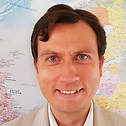
I am a postdoctoral researcher based at the Centre for Complexity Science and IX at Imperial College London. Suffering from a wandering sense of curiosity and lack of experimental aptitude, I have found myself studying opinion dynamics, economic complexity, game theory, evolutionary biology and computational neuroscience. I am currently working on the Statistical Physics of Cognition project to study self-organized criticality in neuronal populations. I will be joining the AI in Science programme at Imperial IX in the fall to study the role of self-organization to facilitate generalizable learning in artificial neural networks.




Northeastern University
Dates of Visit(s): 7/7/24- 8/31/24
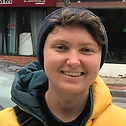
I am a systems biologist interested in: (i) how organisms sort, collect, and encode (biochemically and genetically) information about the environment, (ii) how environmental information drives programs of development, growth, and reproduction, and (iii) how links between environmental information processing and physiology have and will change over ecological and evolutionary timescales. I see vast opportunities to: (a) apply model system approaches to ecologically relevant marine systems with complex life cycles, (b) simulate environmentally relevant conditions in long-term laboratory studies, (c) integrate laboratory studies with studies of natural populations and environmental metadata. It is of utmost importance to me to apply my training in mathematical and computational sciences, biochemistry, developmental biology, and extreme field biology to make substantive, actionable forecasts of how life will respond to global climate change. I am grateful for the opportunity to return to Chicago (U of Chicago PhD 2016) as a Visiting Scholar at NITMB. I hope that my experiences here will help me forge a strong and innovative independent research program. I joined Northeastern University’s Department of Biology in January 2024 with the specific task of building out mathematical and computational training for biology undergraduates. So, I am also excited to learn more about NITMB’s training programs and implement your pedagogical recommendations.